Guitar Arpeggios — The 9 Core Arpeggios on the Fretboard
What it isA chord played one note at a time
Core types9 — triads and 7th chords
Shown inThe key of A
Positions5, one inside each pentatonic box
An arpeggio is a chord played one note at a time instead of strummed. On guitar you spread the chord's notes across all six strings and play them in order, low to high and back. Arpeggios are how soloists outline the chords: land on these notes and your lines sound like the harmony instead of a scale running over it. This page covers the nine core arpeggios every guitarist uses, with fretboard diagrams in the key of A.
The 9 Core Guitar Arpeggios
Arpeggio
Formula
Notes in A
Major
R · 3 · 5
A · C♯ · E
Minor
R · ♭3 · 5
A · C · E
Augmented
R · 3 · ♯5
A · C♯ · E♯
Diminished
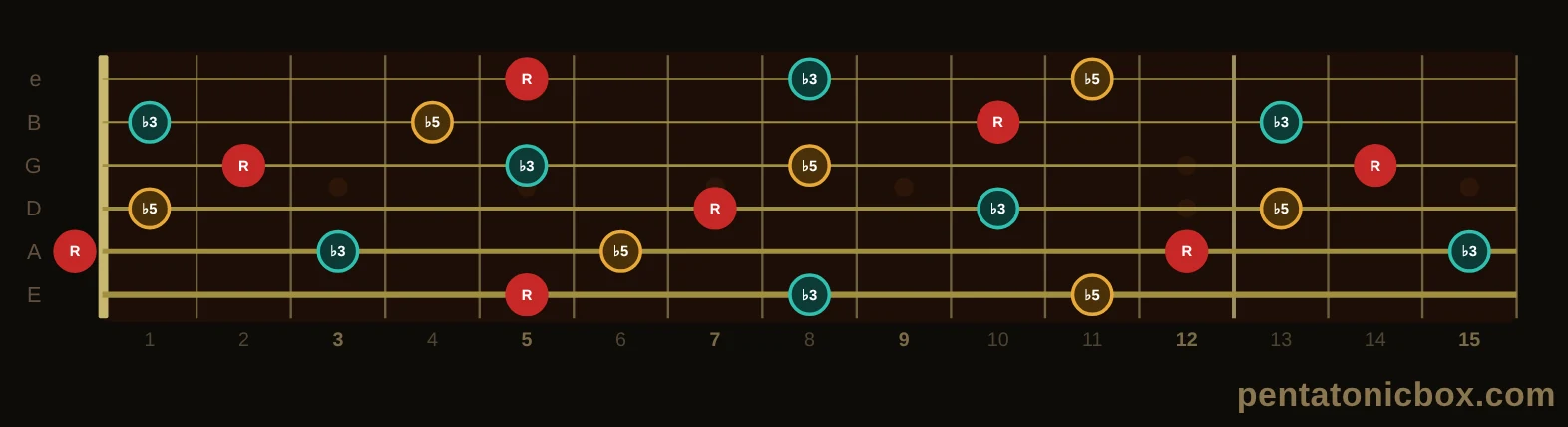
R · ♭3 · ♭5
A · C · E♭
Major 7
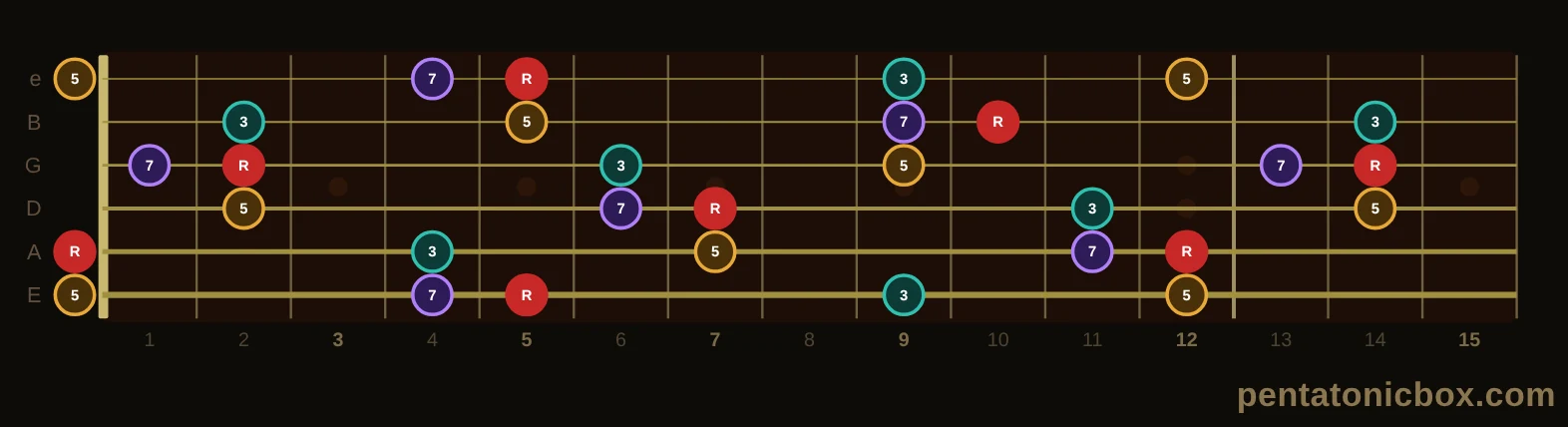
R · 3 · 5 · 7
A · C♯ · E · G♯
Minor 7
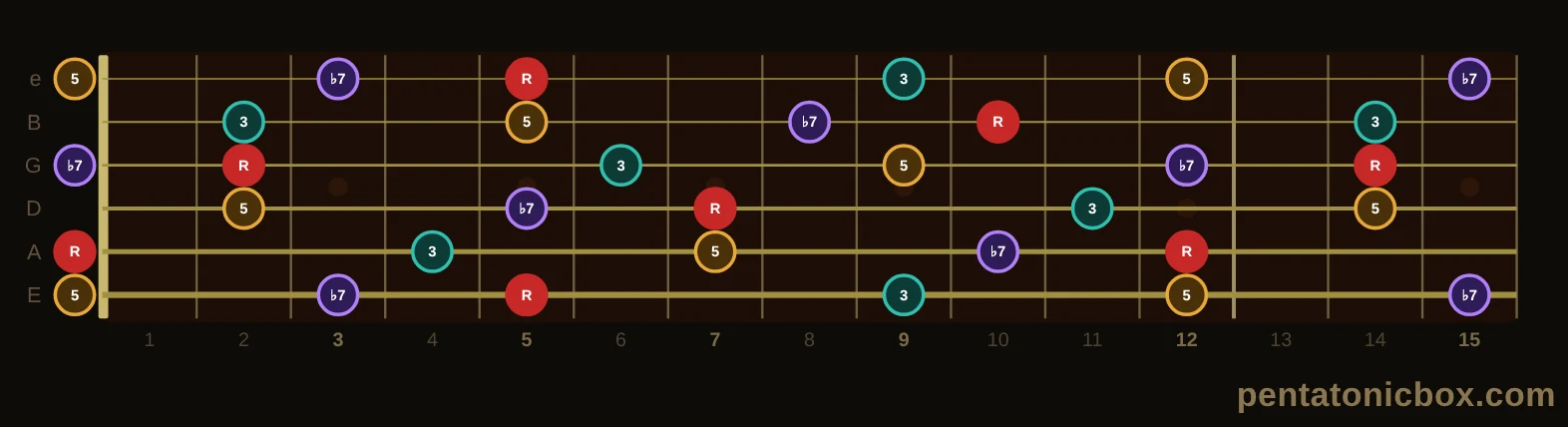
R · ♭3 · 5 · ♭7
A · C · E · G
Dominant 7
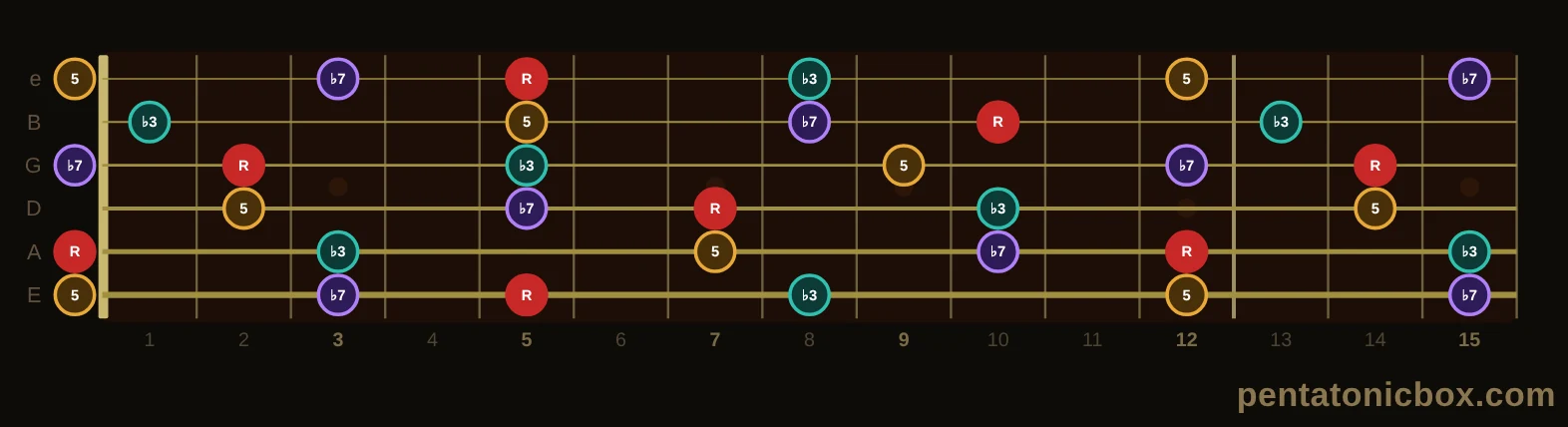
R · 3 · 5 · ♭7
A · C♯ · E · G
Half-diminished (m7♭5)
R · ♭3 · ♭5 · ♭7
A · C · E♭ · G
Diminished 7
R · ♭3 · ♭5 · ♭♭7
A · C · E♭ · G♭
The first four are triads (three notes). The last five add a 7th, which gives the richer sound of jazz, soul and blues.
A Minor 7 Arpeggio in All 5 Positions
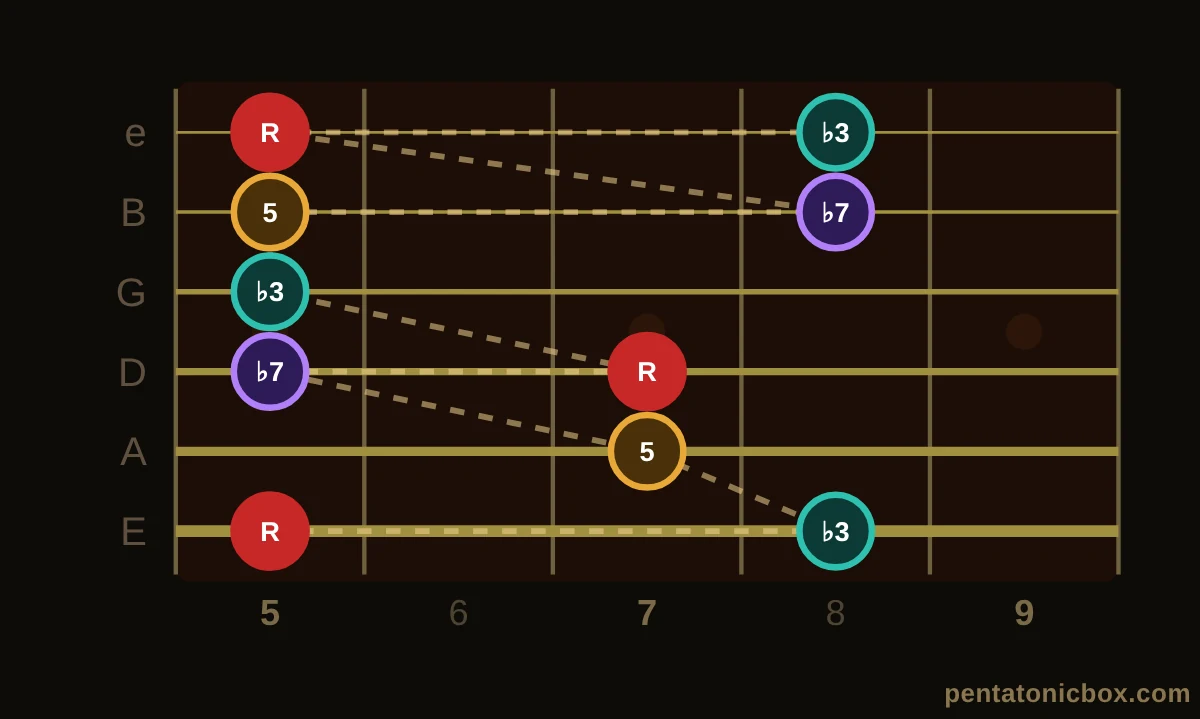
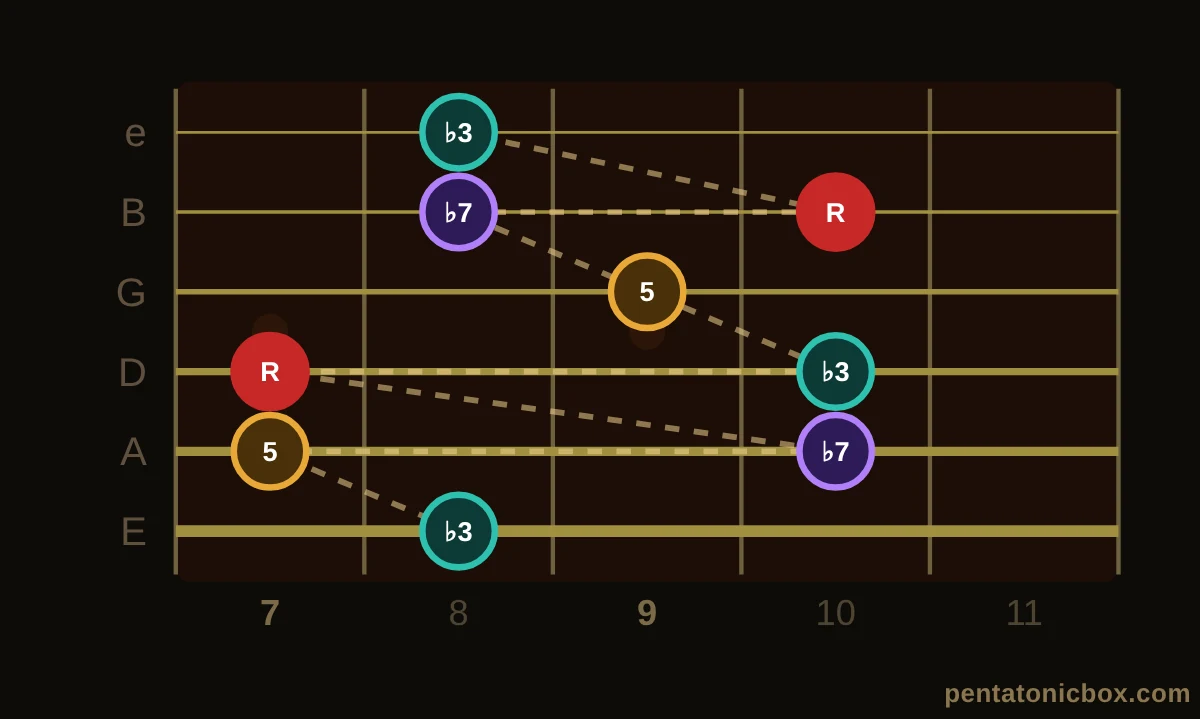
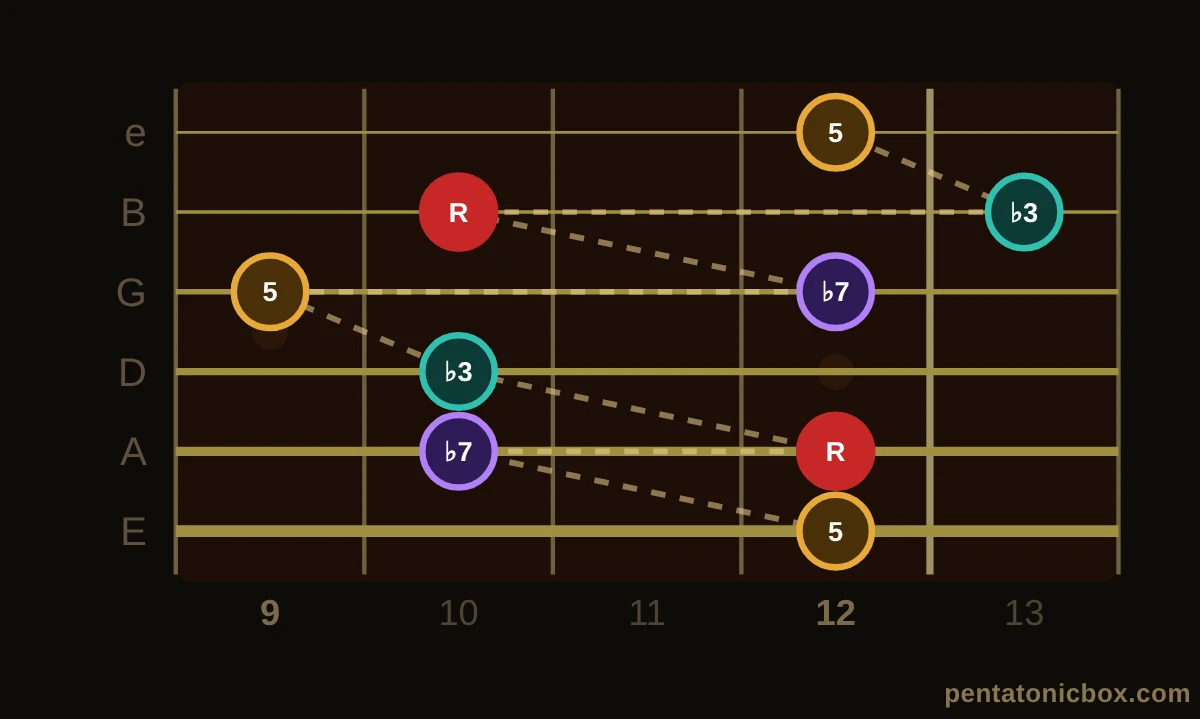
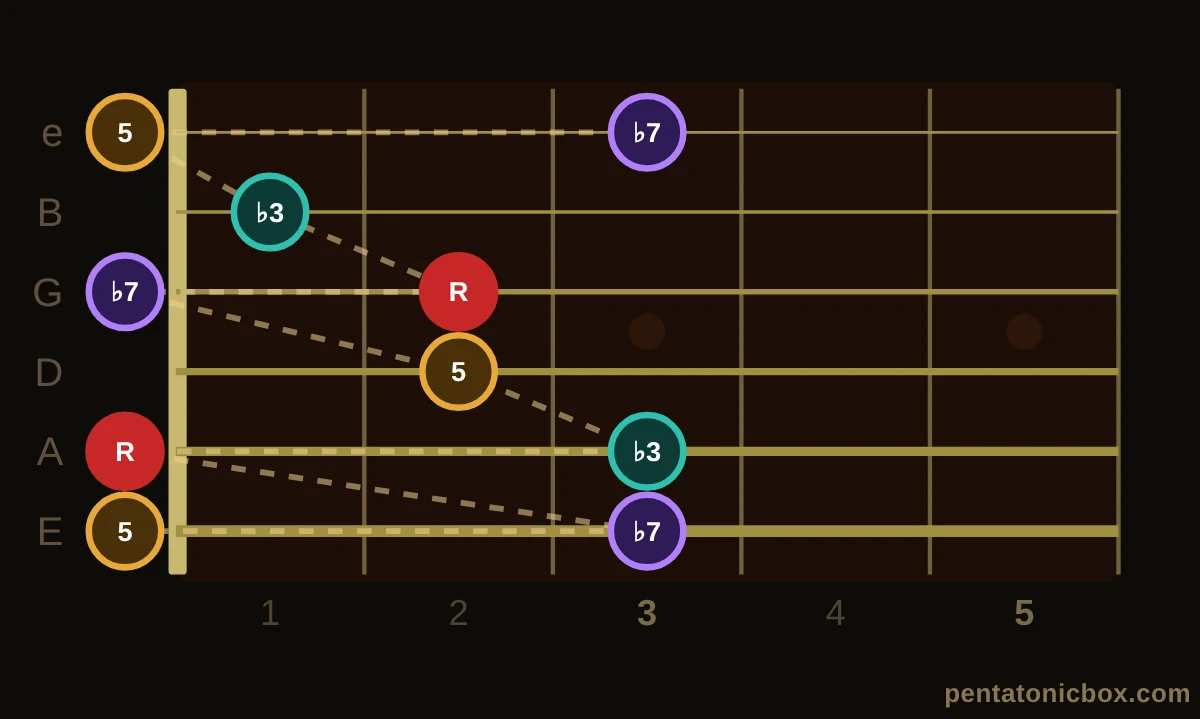
Each position sits inside one of the five pentatonic boxes, so if you already know the boxes you already know where the arpeggio lives. Minor 7 is the easiest place to start: all four of its notes are in the minor pentatonic scale, so each shape is a pentatonic box with one note taken out.
Root3rd5th7th
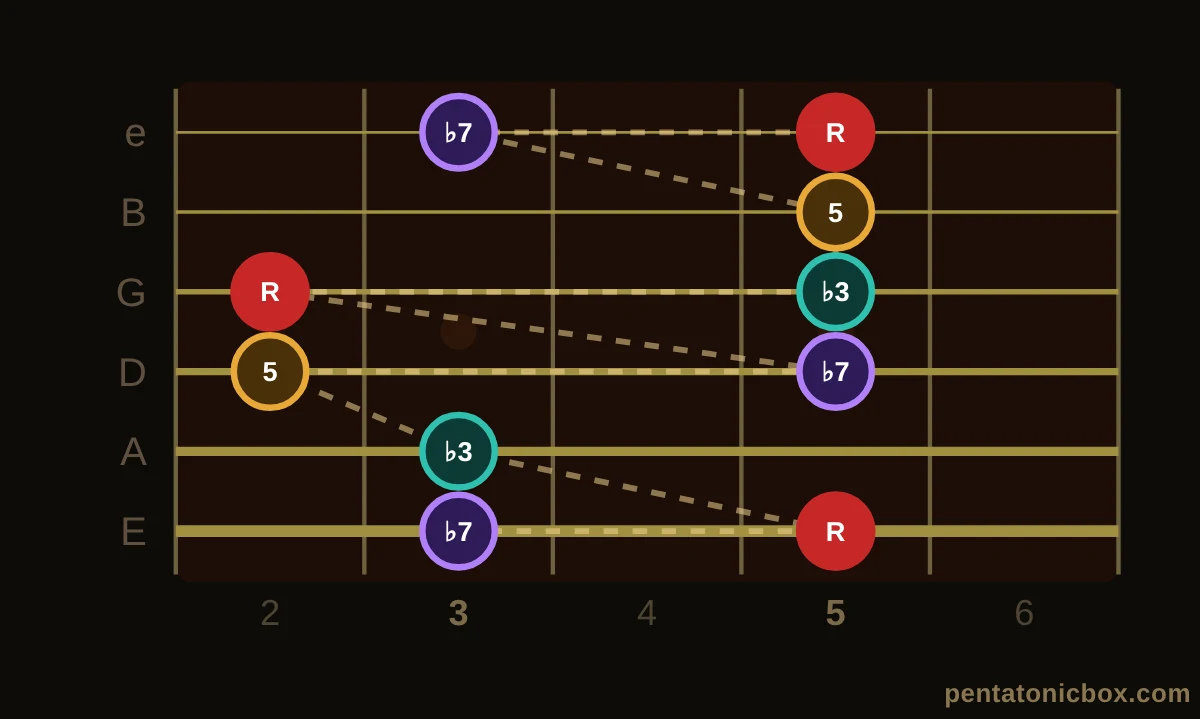
Position 1 — Frets 5–8
Inside Box 1 of A minor pentatonic. The dashed line shows the order to play it, low to high.
Position 2 — Frets 7–10
Inside Box 2 of A minor pentatonic. The dashed line shows the order to play it, low to high.
Position 3 — Frets 9–13
Inside Box 3 of A minor pentatonic. The dashed line shows the order to play it, low to high.
Position 4 — Open position · frets 0–3
Inside Box 4 of A minor pentatonic. The dashed line shows the order to play it, low to high.
Position 5 — Frets 2–5
Inside Box 5 of A minor pentatonic. The dashed line shows the order to play it, low to high.
The fretboard and pentatonic boxes are free. All 9 arpeggios in all 12 keys and 5 positions, with chord tones you can switch on and off, are part of Pro.
Free
✓Minor and major pentatonic — all 5 boxes, any key ✓Full 24-fret neck ✓Left-handed mode –Plain dots, no labels
Pro $20 one-time
✓Arpeggios — 9 types, 5 positions, all 12 keys ✓Note names & interval numbers on every dot ✓Blue note — master playing the blues ✓Full scales & all 7 modes (Major, Minor, Dorian, Lydian…) Get Pro — $20 →
Every Arpeggio on the Full Neck
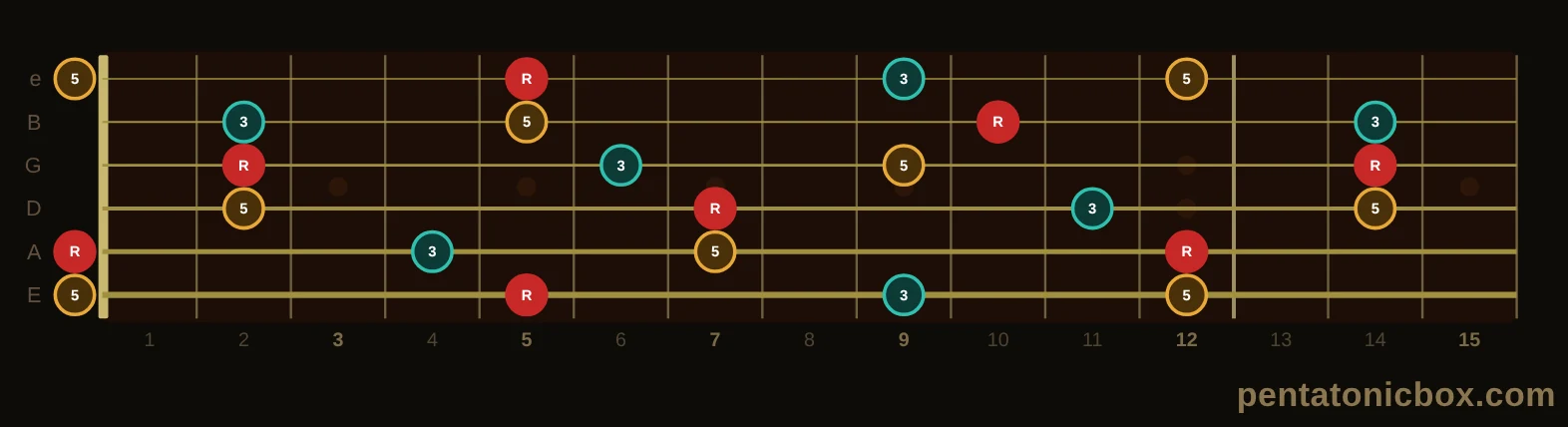
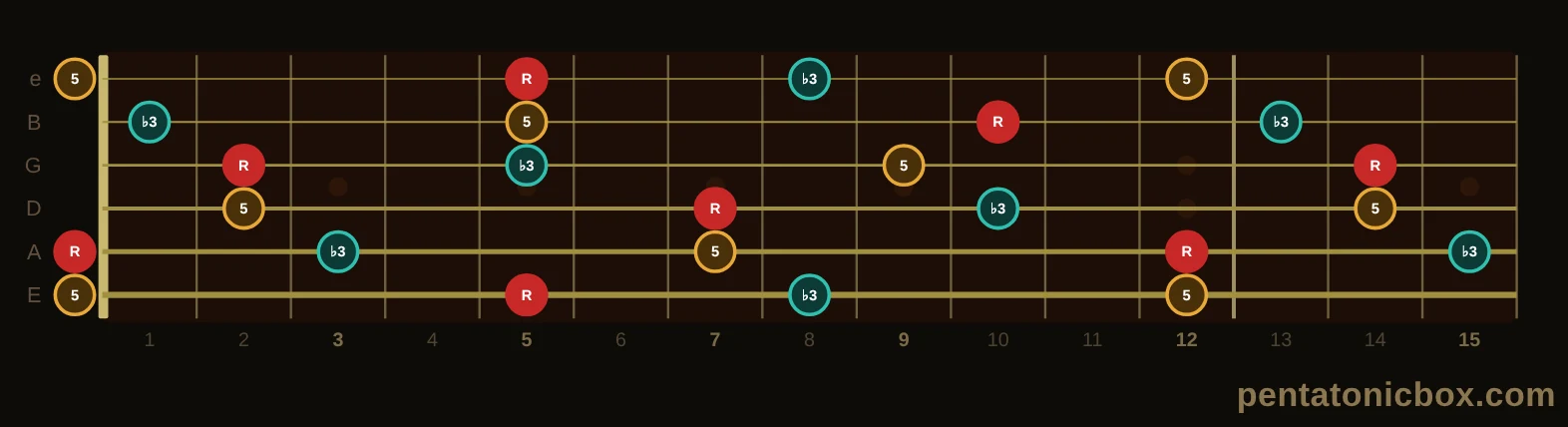
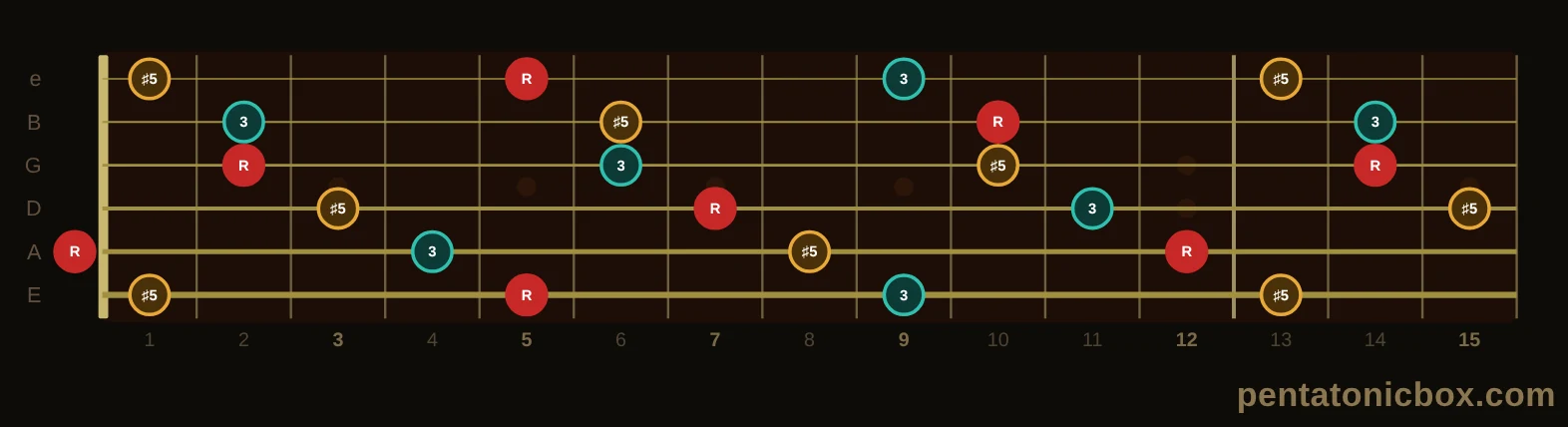
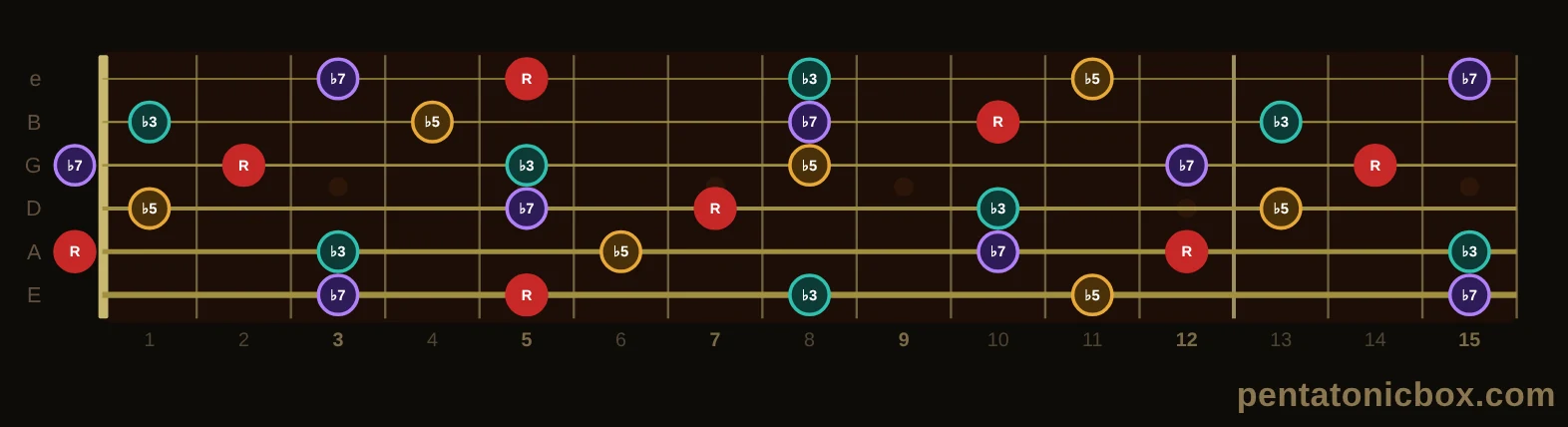
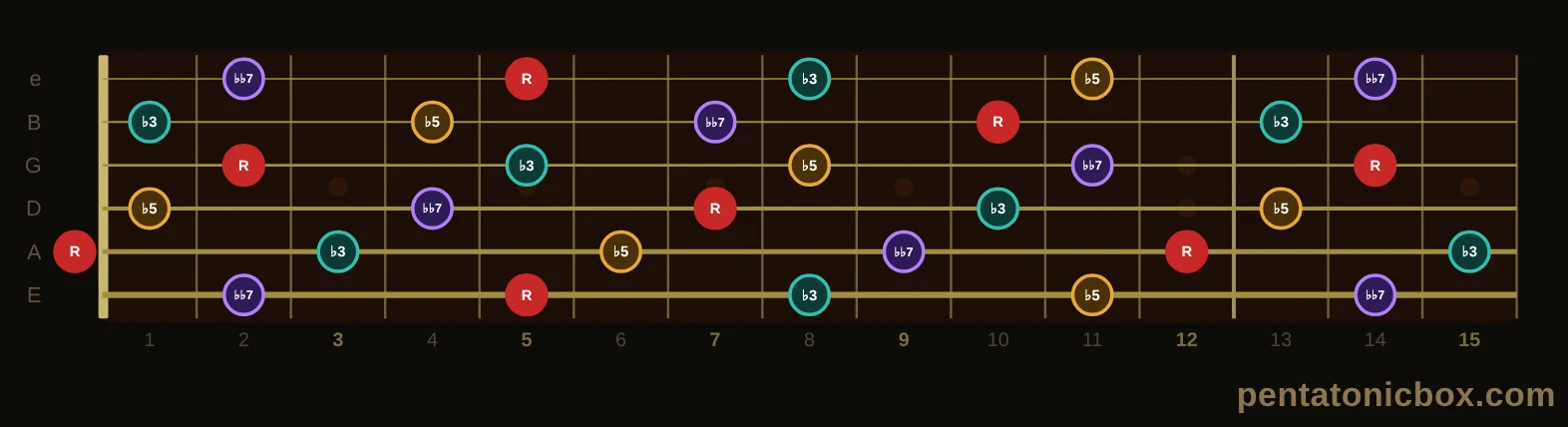
Each diagram shows every chord tone from the open strings to the 15th fret. Red is the root, teal the 3rd, gold the 5th and purple the 7th.
A Major Arpeggio (A) — A · C♯ · E
Bright and stable. The arpeggio of every major chord.
A Minor Arpeggio (Am) — A · C · E
The darker counterpart. Fits every minor chord.
A Augmented Arpeggio (A+) — A · C♯ · E♯
A major triad with a raised 5th. Tense and dreamy, often used as a passing chord.
A Diminished Arpeggio (A°) — A · C · E♭
A minor triad with a lowered 5th. Unstable and pulls hard toward the next chord.
A Major 7 Arpeggio (Amaj7) — A · C♯ · E · G♯
Smooth and lush. Common in jazz, soul and R&B ballads.
A Minor 7 Arpeggio (Am7) — A · C · E · G
Mellow and versatile. Sits entirely inside the minor pentatonic scale.
A Dominant 7 Arpeggio (A7) — A · C♯ · E · G
The sound of the blues and funk. The 3rd and ♭7 create a tension that wants to resolve.
A Half-diminished (m7♭5) Arpeggio (Am7♭5) — A · C · E♭ · G
A diminished triad plus a ♭7. The ii chord in minor-key jazz.
A Diminished 7 Arpeggio (A°7) — A · C · E♭ · G♭
Stacked minor 3rds, so the shape repeats every three frets. A classic passing sound.
Which Arpeggio Fits Which Scale
When the arpeggio and the scale start on the same root, these pairs share their notes. Use the arpeggio to target chord tones, and the scale to fill the space between them.
None of the 7 modes (harmonic minor, diminished scale)
—
The classic pairings are one 7th arpeggio per mode: major 7 with Ionian and Lydian, minor 7 with Dorian, Phrygian and Aeolian, dominant 7 with Mixolydian, and half-diminished with Locrian. New to modes? Start with guitar modes explained.
How to Practice Arpeggios
Start with A minor 7, Position 1, at the 5th fret. Play it slowly from the lowest note to the highest and back, one note per beat.
Say the chord tone as you play (root, ♭3, 5, ♭7). Knowing which note you are on is the whole point.
Add Position 2, then connect the two by sliding between notes they share.
Swap the chord: play A dominant 7 in the same spot. Only the 3rd changes, and that one fret is the difference between minor and dominant.
Use it over music. Over a blues or a ii–V–I, play the arpeggio of each chord as it goes by, then mix in the matching scale.
Arpeggios vs. Triad Shapes
A triad shape packs three chord notes onto three neighboring strings so you can strum or pick them together. An arpeggio spreads the chord's notes across all six strings, played one at a time. Same notes, different job: triads for rhythm parts and comping, arpeggios for soloing. Learn the triad shapes on the guitar triads page, and the five full chord shapes behind both on the CAGED system page.
Minor 7, Dominant 7 and Major 7 Arpeggios in Every Key
Each key has its own page with the full neck and all 5 positions.
An arpeggio is a chord played one note at a time. On guitar you play the chord's notes across the strings in order, low to high and back, instead of strumming them together.
Which arpeggios should I learn first?
Start with minor 7 and dominant 7. Minor 7 sits inside the minor pentatonic scale, and dominant 7 is the sound of the blues. Then add major 7 and the major and minor triads.
What is the difference between an arpeggio and a scale?
A scale uses every note in the key. An arpeggio uses only the notes of one chord, usually three or four. Playing the arpeggio makes your solo outline the chord you are playing over.
What is a half-diminished arpeggio?
Half-diminished, written m7♭5, is a minor 7 arpeggio with a lowered 5th: R, ♭3, ♭5, ♭7. It is the chord built on the 7th degree of the major scale and the ii chord in minor-key jazz.
Does Pentatonic Box show arpeggios in every key?
Yes. Pro shows all 9 arpeggios in all 12 keys and in 5 positions, with each chord tone colored and switchable, alongside triads in every inversion.