D Major 7 Arpeggio (Dmaj7) — 5 Positions on the Fretboard

ChordDmaj7
NotesD · F♯ · A · C♯
FormulaR · 3 · 5 · 7
Positions5, one inside each pentatonic box

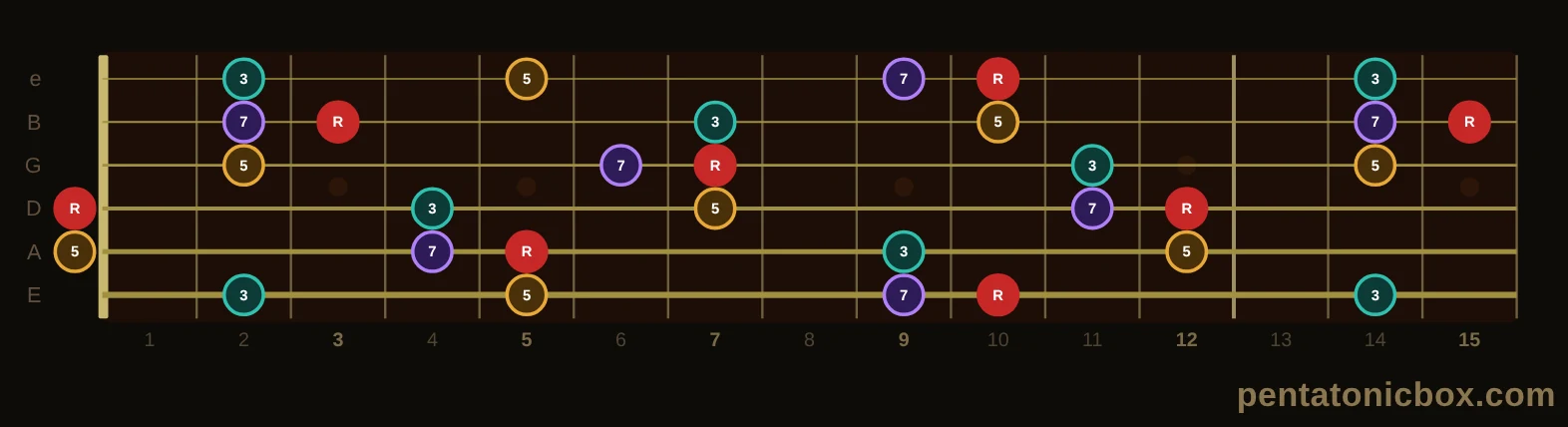
The D major 7 arpeggio (Dmaj7) is the Dmaj7 chord played one note at a time: D, F♯, A and C♯. Smooth and lush, common in jazz, soul and R&B ballads. Below is every Dmaj7 chord tone on the neck, then the five positions, each sitting inside one box of D major pentatonic.

Dmaj7 Arpeggio on the Full Neck

Root (D)3rd (F♯)5th (A)7th (C♯)
D major 7 arpeggio on guitar, every chord tone from the open strings to fret 15

Every Dmaj7 chord tone from the open strings to the 15th fret.

D Major 7 Arpeggio in All 5 Positions

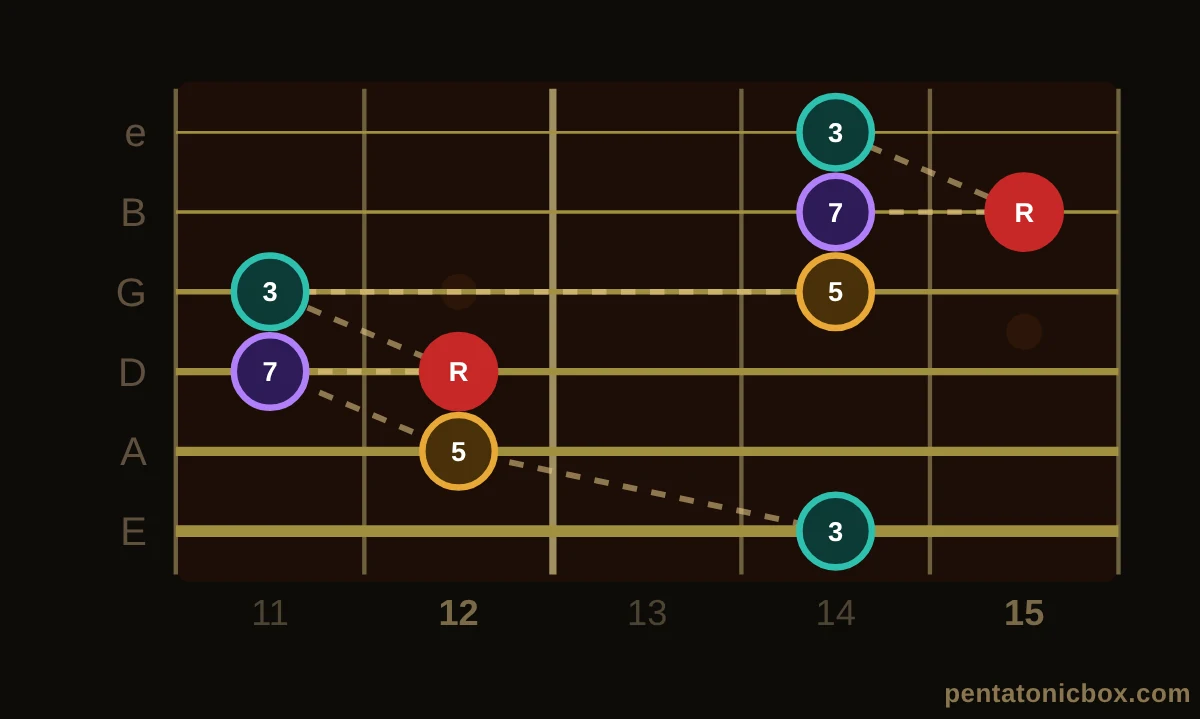
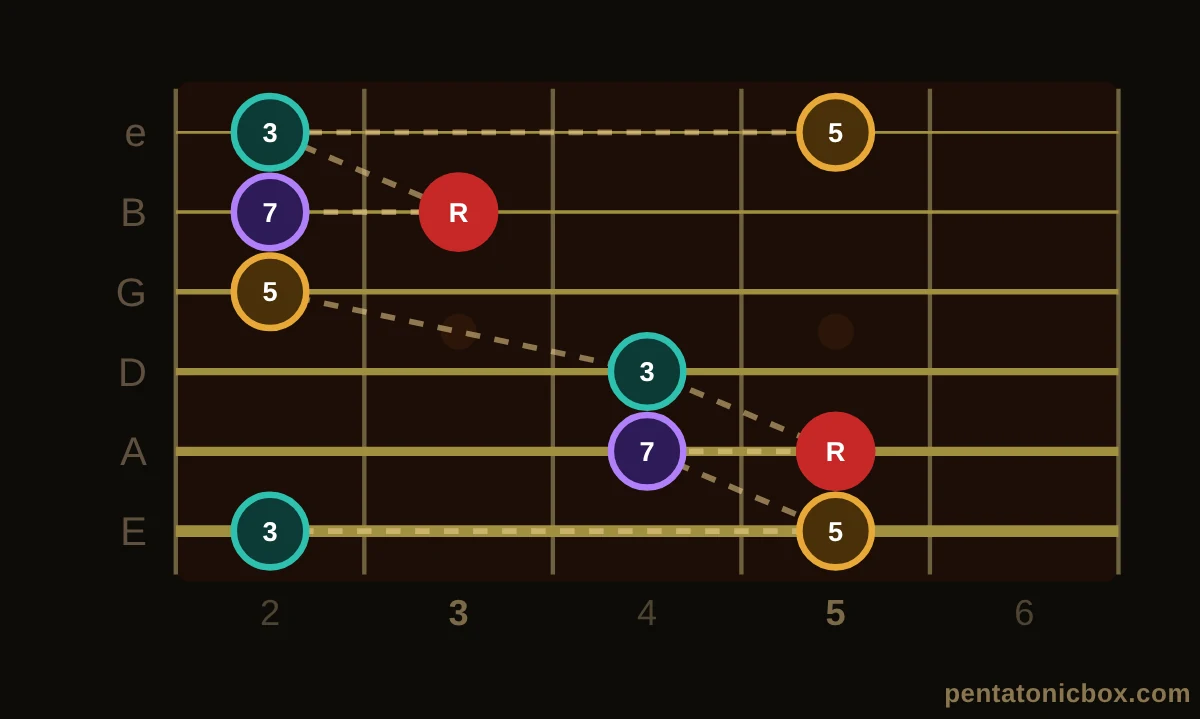
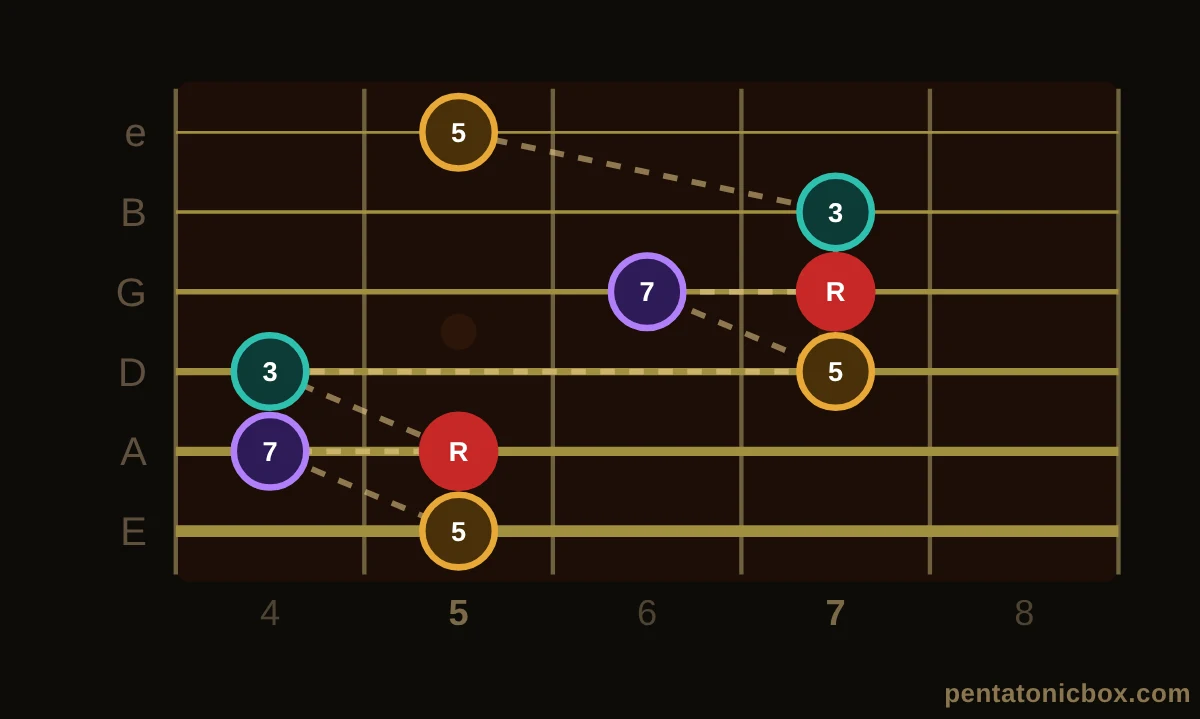
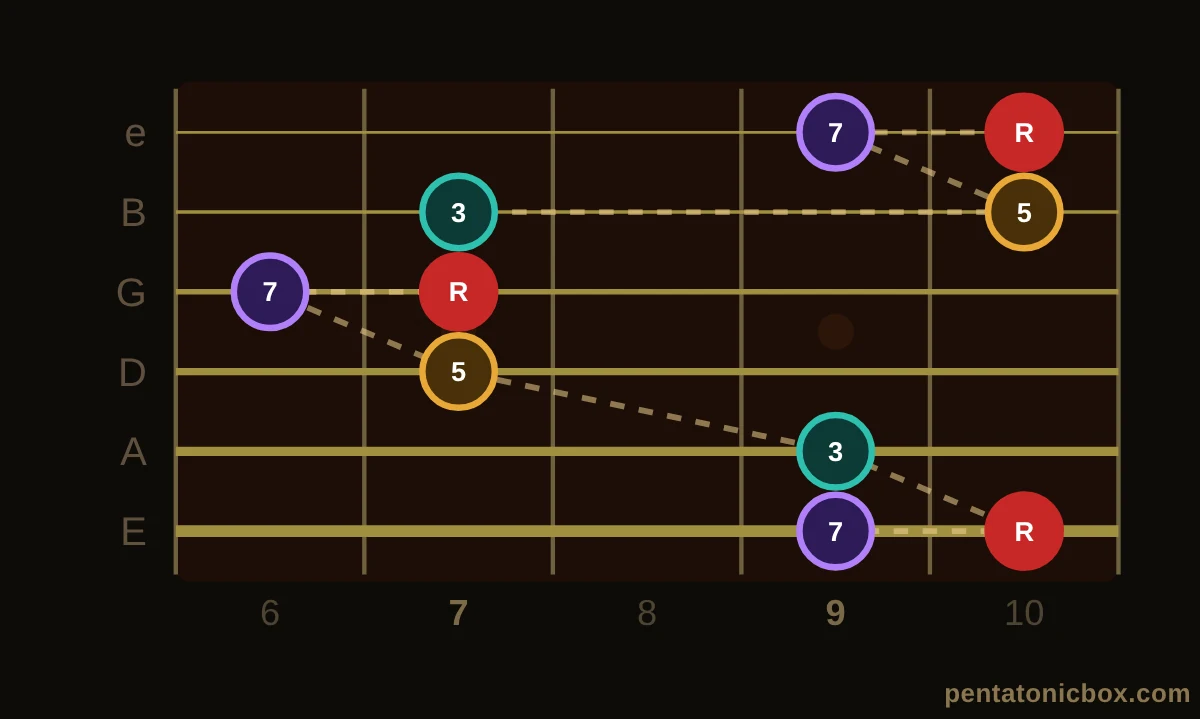
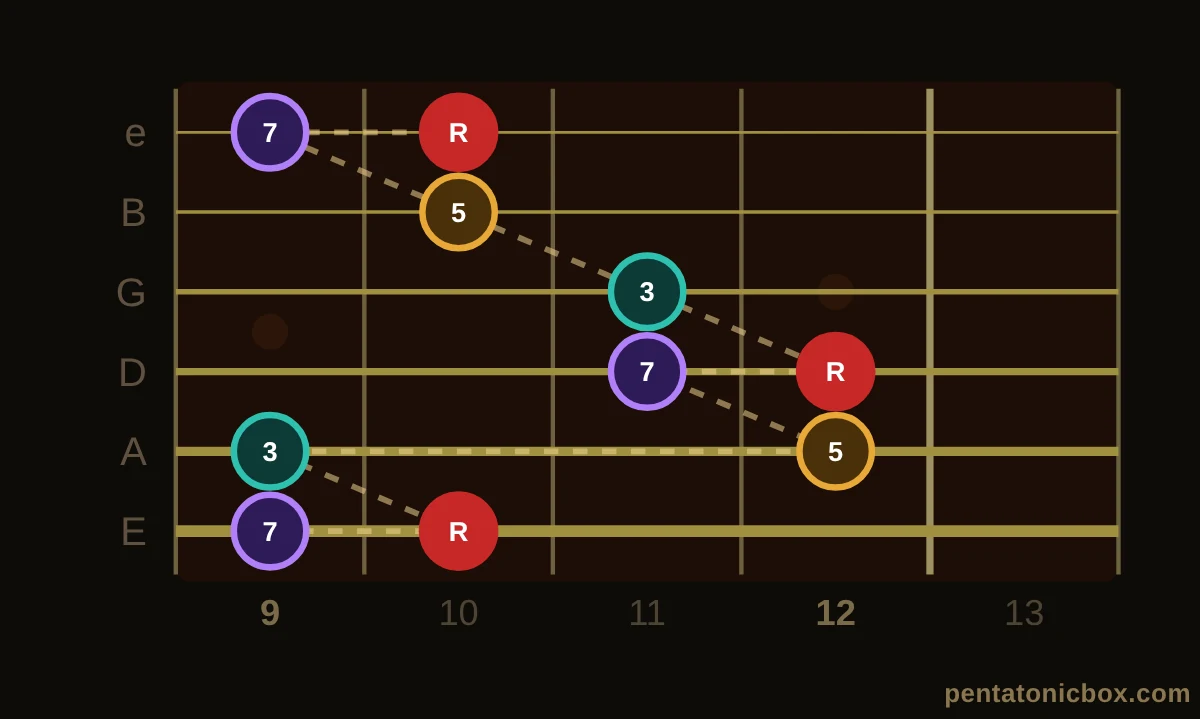
Each position uses only the notes of one pentatonic box, so if you know the boxes you already know where the arpeggio lives. The dashed line shows the order to play it, low to high.

Position 1 — Frets 9–12

D major 7 arpeggio, position 1, on guitar

Inside Box 1 of D major pentatonic. Open in the fretboard →

Position 2 — Frets 11–15

D major 7 arpeggio, position 2, on guitar

Inside Box 2 of D major pentatonic. Open in the fretboard →

Position 3 — Frets 2–5

D major 7 arpeggio, position 3, on guitar

Inside Box 3 of D major pentatonic. Open in the fretboard →

Position 4 — Frets 4–7

D major 7 arpeggio, position 4, on guitar

Inside Box 4 of D major pentatonic. Open in the fretboard →

Position 5 — Frets 6–10

D major 7 arpeggio, position 5, on guitar

Inside Box 5 of D major pentatonic. Open in the fretboard →

Open the Dmaj7 Arpeggio in the Interactive Fretboard (Pro) →

The fretboard and pentatonic boxes are free. All 9 arpeggios in all 12 keys and 5 positions, with each chord tone colored and switchable, are part of Pro ($20 one-time).

What Scale Goes With Dmaj7?

The Dmaj7 arpeggio shares its notes with D Ionian, D Lydian, and with the major pentatonic plus the 7th. Use the arpeggio to land on chord tones and the scale to fill the space between them.

How to Practice the Dmaj7 Arpeggio

  1. Start with Position 1. Play it slowly from the lowest note to the highest and back, one note per beat.
  2. Say the chord tones (R, 3, 5, 7) as you play. Knowing which note you are on is the point.
  3. Add Position 2 and connect the two by sliding between the notes they share.
  4. Compare it with D7: lower the 7th one fret to a ♭7 and you have the dominant 7 sound, in the same spot.
  5. Use it over music: play Dmaj7 over a Dmaj7 chord or a vamp, then mix in the matching scale.

Related

Other arpeggios in D: Dm7 arpeggio · D7 arpeggio. The three-note version: D triads. All nine arpeggio types: guitar arpeggios guide.

Major 7 arpeggio in other keys: Cmaj7 · C#maj7 · Ebmaj7 · Emaj7 · Fmaj7 · F#maj7 · Gmaj7 · Abmaj7 · Amaj7 · Bbmaj7 · Bmaj7.

Guides: pentatonic boxes guide · connecting the 5 boxes · breaking out of the box · learning the fretboard notes · mixing major and minor pentatonic · left-handed scale charts · guitar modes explained.

Frequently Asked Questions

What notes are in the D major 7 arpeggio?

D, F♯, A and C♯ — the root, 3, 5 and 7 of Dmaj7.

What scale fits the Dmaj7 arpeggio?

D Ionian, D Lydian, and the D major pentatonic plus the 7th.

What is the difference between Dmaj7 and D7?

One note: lower the 7th one fret to a ♭7 and Dmaj7 becomes D7 (dominant 7).

How many positions does the D major 7 arpeggio have?

Five, one inside each of the five pentatonic boxes, repeating every 12 frets.
Pentatonic Scale Charts for Every Key

A Minor E Minor G Minor D Minor B Minor C Minor F Minor Bb Minor A Major E Major G Major D Major B Major C Major F Major Bb Major Minor pentatonic scale → Major pentatonic scale → Blues scale → Free printable charts →

← Read the full guide: How to Use Pentatonic Boxes