Dorian Mode is one of the 7 modes derived from the major scale. Its interval formula — 1 2 b3 4 5 6 b7 — gives it a distinctive sound that sets it apart from every other mode. The characteristic note is the major 6th (the raised 6th), which is what your ear latches onto and identifies as the Dorian Mode sound.
You hear it in: Carlos Santana, Stevie Wonder, Miles Davis, Daft Punk (Get Lucky), Pink Floyd (Another Brick in the Wall).
Dorian has a natural 6th where Aeolian has a flat 6th. That one note makes Dorian sound brighter and groovier.
Parent major key: whole step below root (parent major = root - 2 frets). So if you want to play A Dorian Mode, find its parent major scale root and use those major scale box positions — the notes will be correct for A Dorian Mode when you emphasize A as the tonal center.
Select Dorian Mode from the Full Scale dropdown — a Pro feature, in all 12 keys. The pentatonic boxes are free.
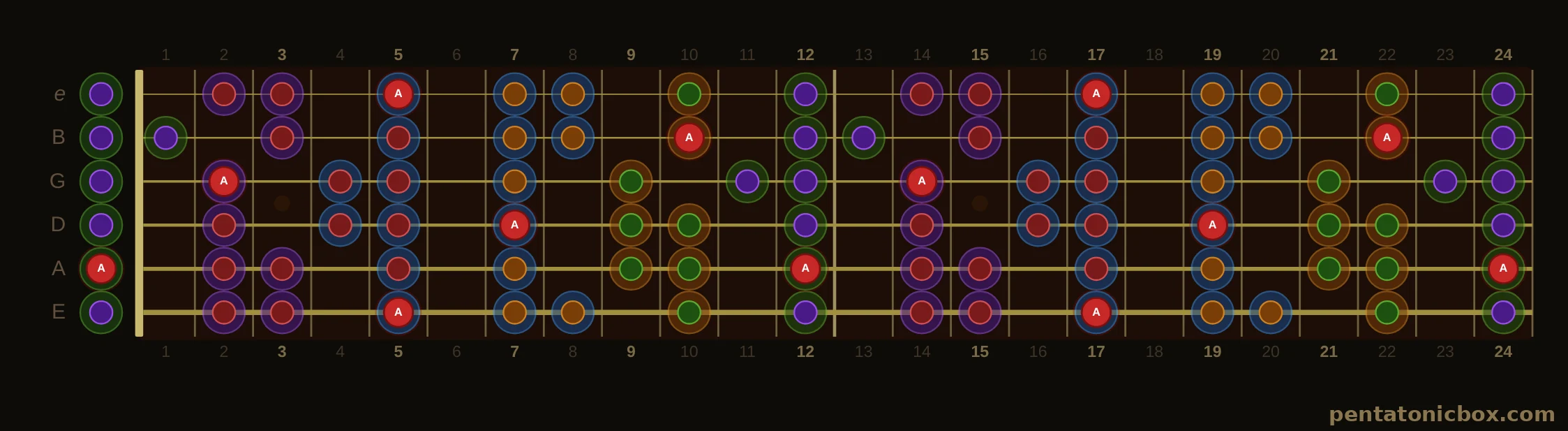
Open Pentatonic Box →Like all modes, Dorian Mode can be played in 5 interconnected box positions that cover the entire neck. Each box sits within a 4-5 fret span and uses the same interval pattern regardless of what key you're in — only the starting fret changes.
A Dorian on the full neck: each color is one box, red dots are the root (A).
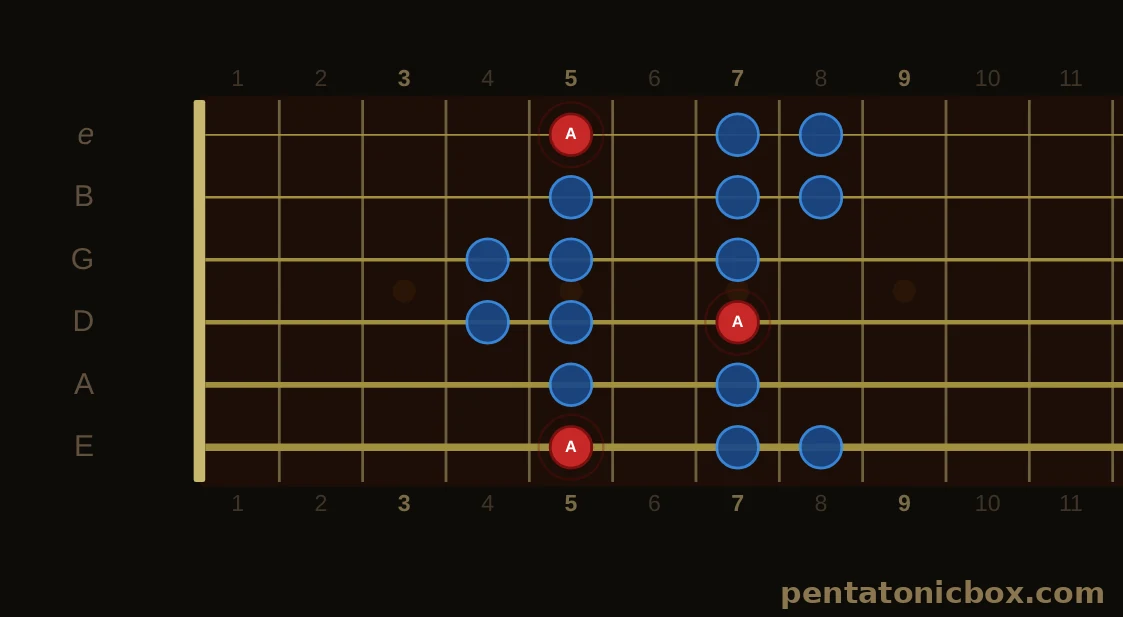
Box 1 on its own. Open A Dorian in the interactive fretboard (Pro) →
Dorian is a minor mode, so its matching 7th arpeggio is the minor 7 arpeggio (R · ♭3 · 5 · ♭7), built on the same root. Aim for those notes when you solo and your Dorian lines outline the chord underneath. For the three-note chord shapes of the same chord, see guitar triads and inversions, and for every pairing see which arpeggio fits which scale.