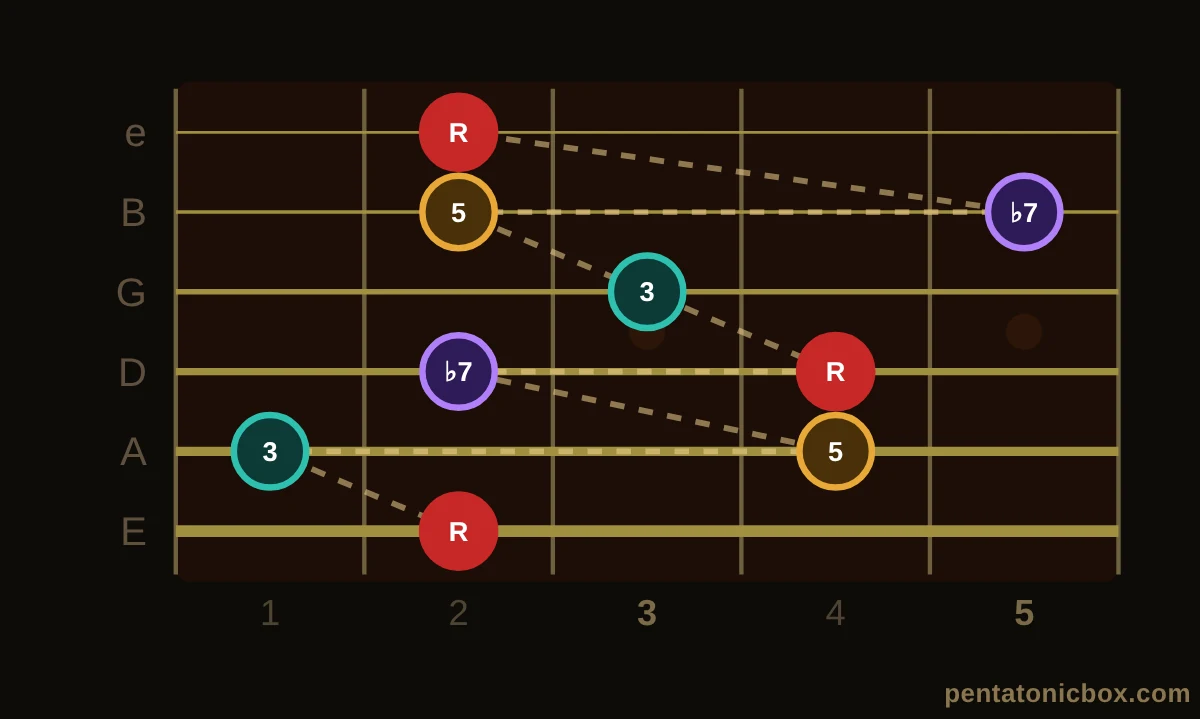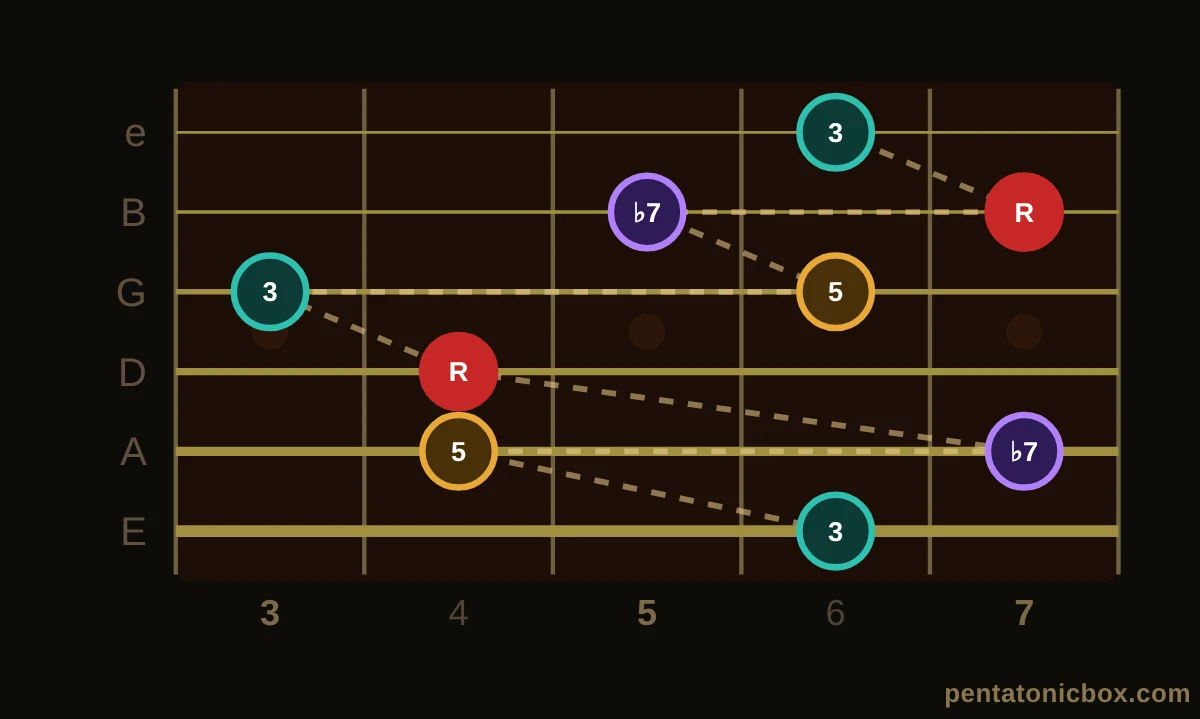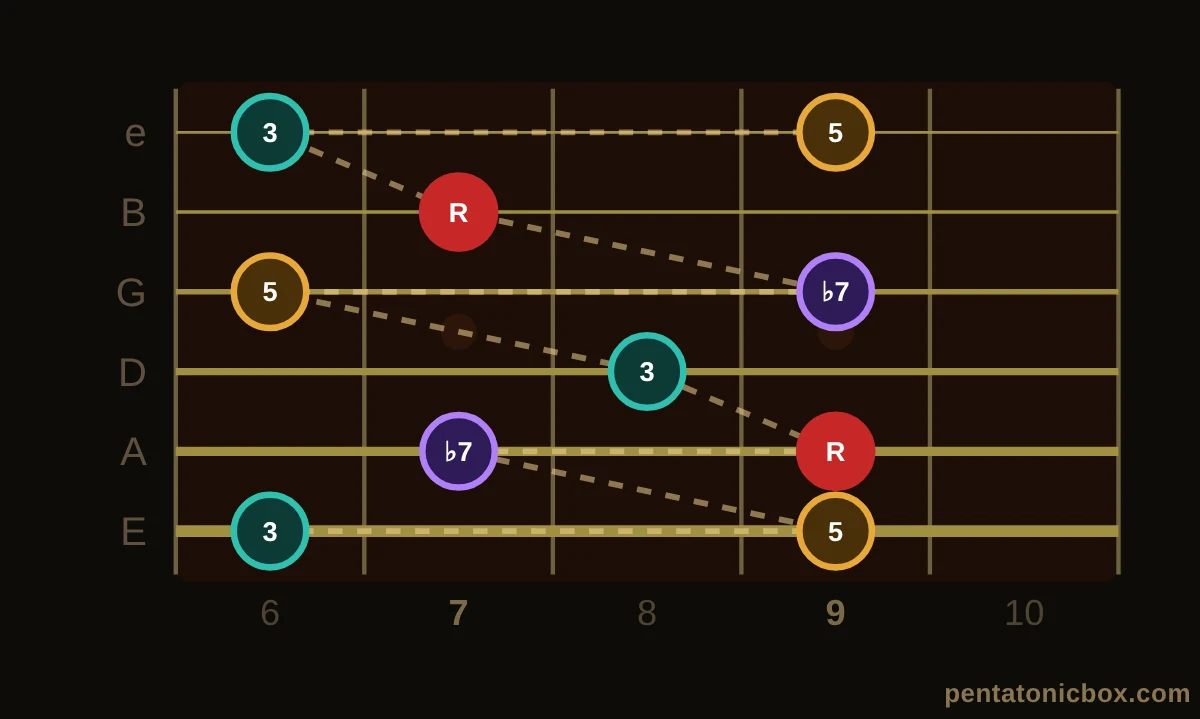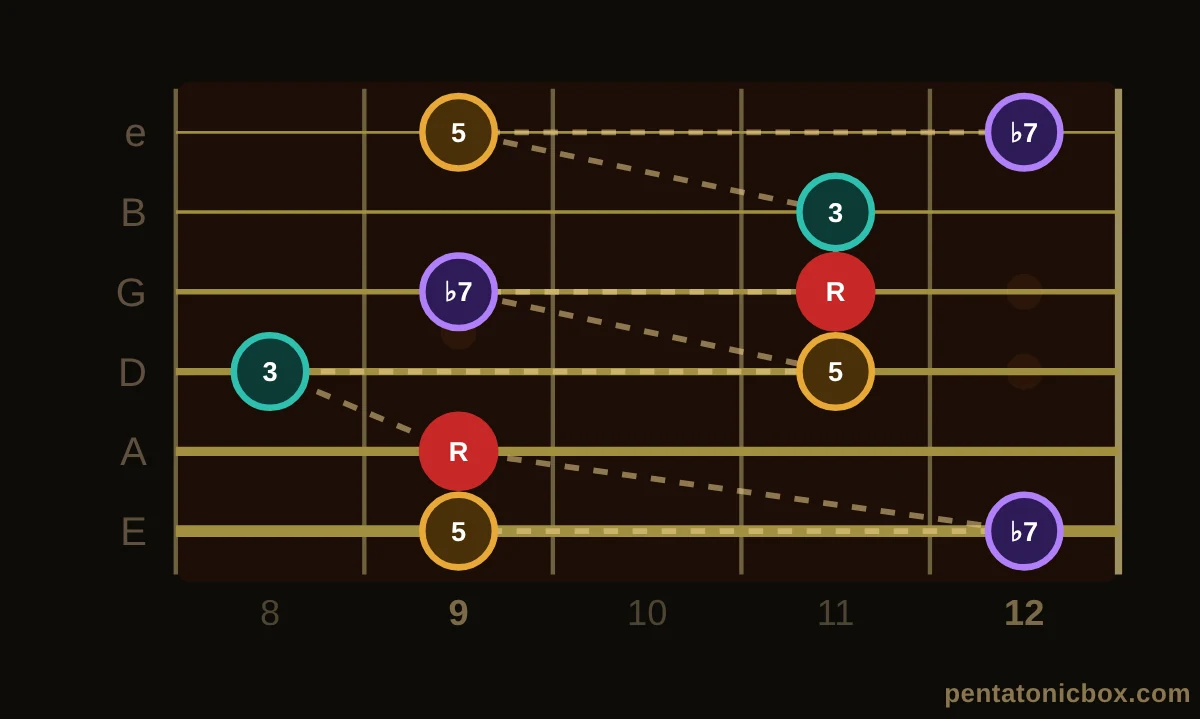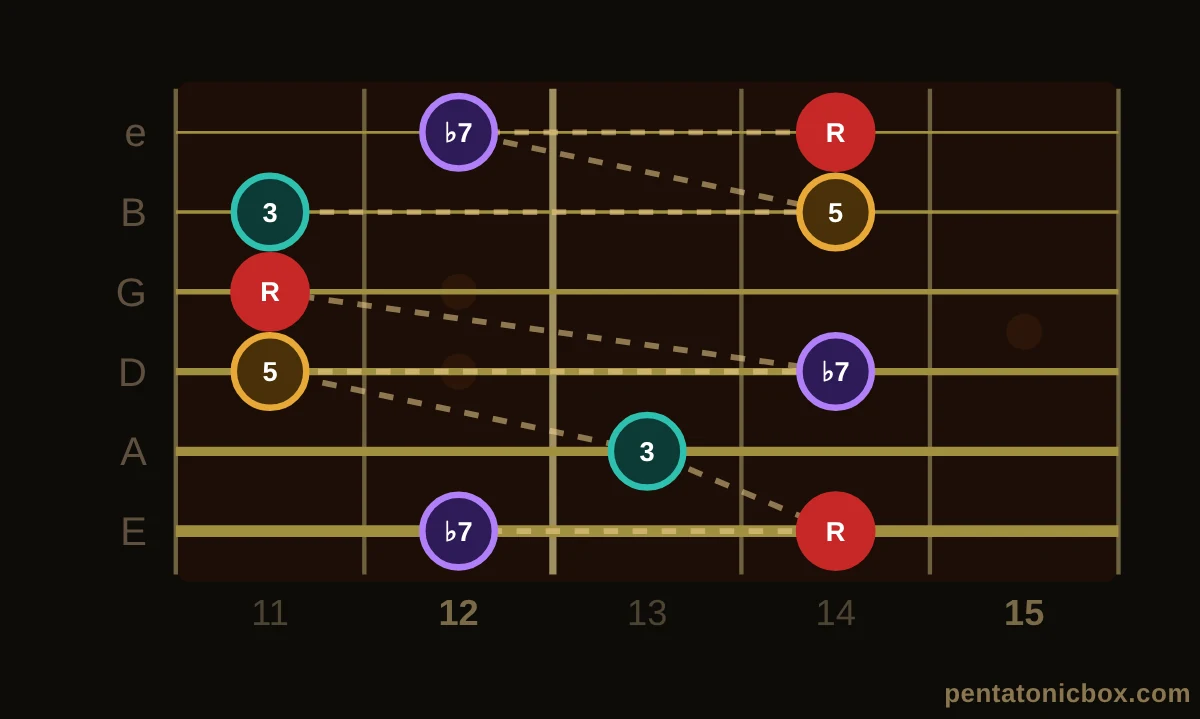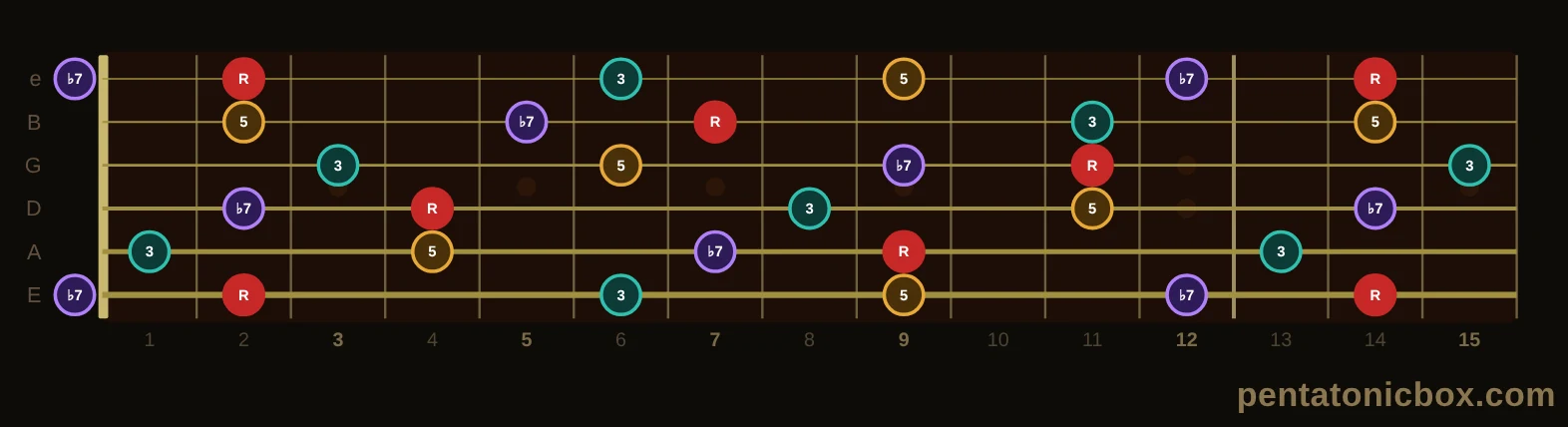
The F# dominant 7 arpeggio (F♯7) is the F♯7 chord played one note at a time: F♯, A♯, C♯ and E. The sound of blues and funk: the 3rd and ♭7 create a tension that wants to resolve. Below is every F♯7 chord tone on the neck, then the five positions, each lined up with one box of F♯ major pentatonic (the ♭7 is the one note outside the box).
Every F♯7 chord tone from the open strings to the 15th fret.
Each position uses only the notes of one pentatonic box, so if you know the boxes you already know where the arpeggio lives. The dashed line shows the order to play it, low to high.
The F♯7 arpeggio shares its notes with F♯ Mixolydian, and with the major pentatonic plus the ♭7. Use the arpeggio to land on chord tones and the scale to fill the space between them.
Other arpeggios in F♯: F♯m7 arpeggio · F♯maj7 arpeggio. The three-note version: F♯ triads. All nine arpeggio types: guitar arpeggios guide.
Dominant 7 arpeggio in other keys: C7 · C#7 · D7 · Eb7 · E7 · F7 · G7 · Ab7 · A7 · Bb7 · B7.
Guides: pentatonic boxes guide · connecting the 5 boxes · breaking out of the box · learning the fretboard notes · mixing major and minor pentatonic · left-handed scale charts · guitar modes explained.
F♯, A♯, C♯ and E — the root, 3, 5 and ♭7 of F#7.
F# Mixolydian, and the F# major pentatonic plus the ♭7.
One note: lower the 3rd one fret to a ♭3 and F#7 becomes F#m7 (minor 7).
Five, one inside each of the five pentatonic boxes, repeating every 12 frets.