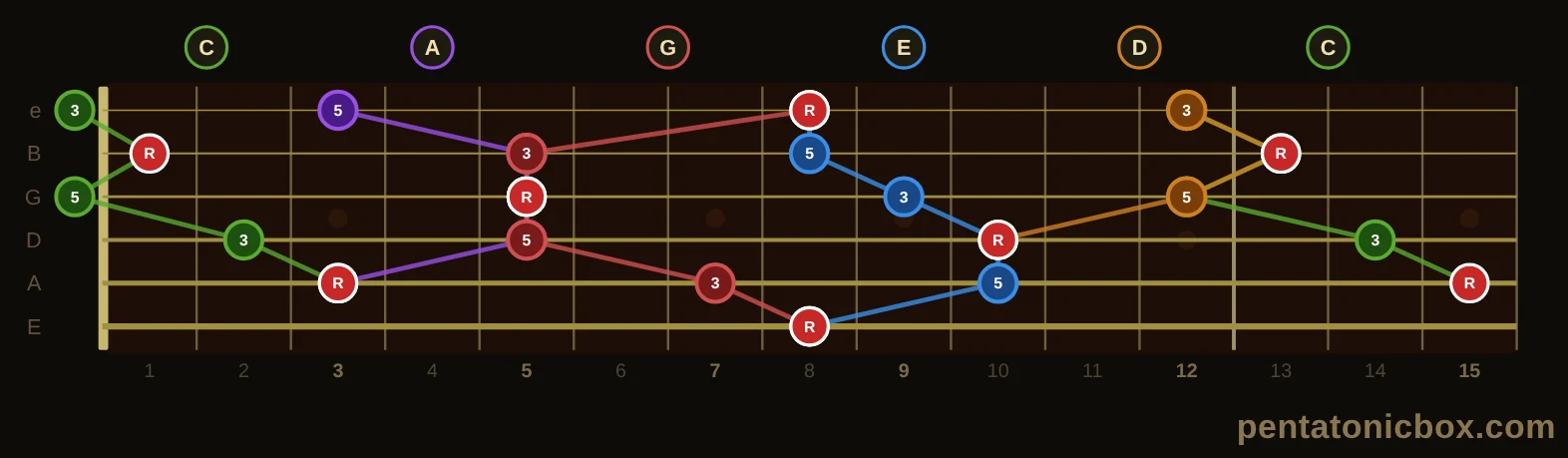
The CAGED system takes the five open chords every guitarist learns first, C, A, G, E and D, and slides them up the neck as movable shapes. Played as the same chord, the five shapes link end to end and cover the whole fretboard. Each shape also sits inside one of the five pentatonic boxes, which is why CAGED is the bridge between chords and soloing: learn where the chord lives and you know where the scale is.
Here is a C major chord played with all five shapes. Start with the open C chord and move up: C shape, A shape, G shape, E shape, D shape, then the C shape again at the 12th fret. Each shape shares notes with the next one, so they lock together like puzzle pieces.
R = root, 3 = major 3rd, 5 = 5th. The letter above each shape is its CAGED name. The order never changes in any key: C → A → G → E → D → C.
Each diagram shows one shape as a C major chord. The faint outlined notes around it are the rest of the pentatonic box the shape sits in.
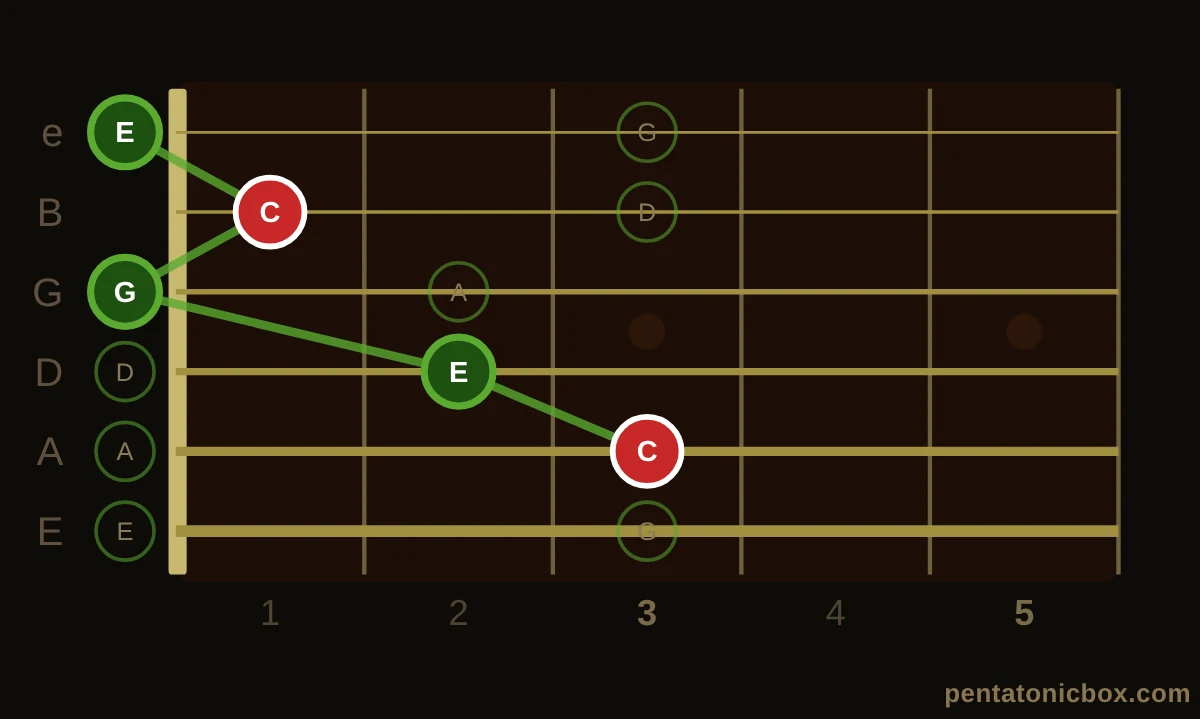
The open C chord. In C it sits in the open position, inside Box 3 of C major pentatonic.
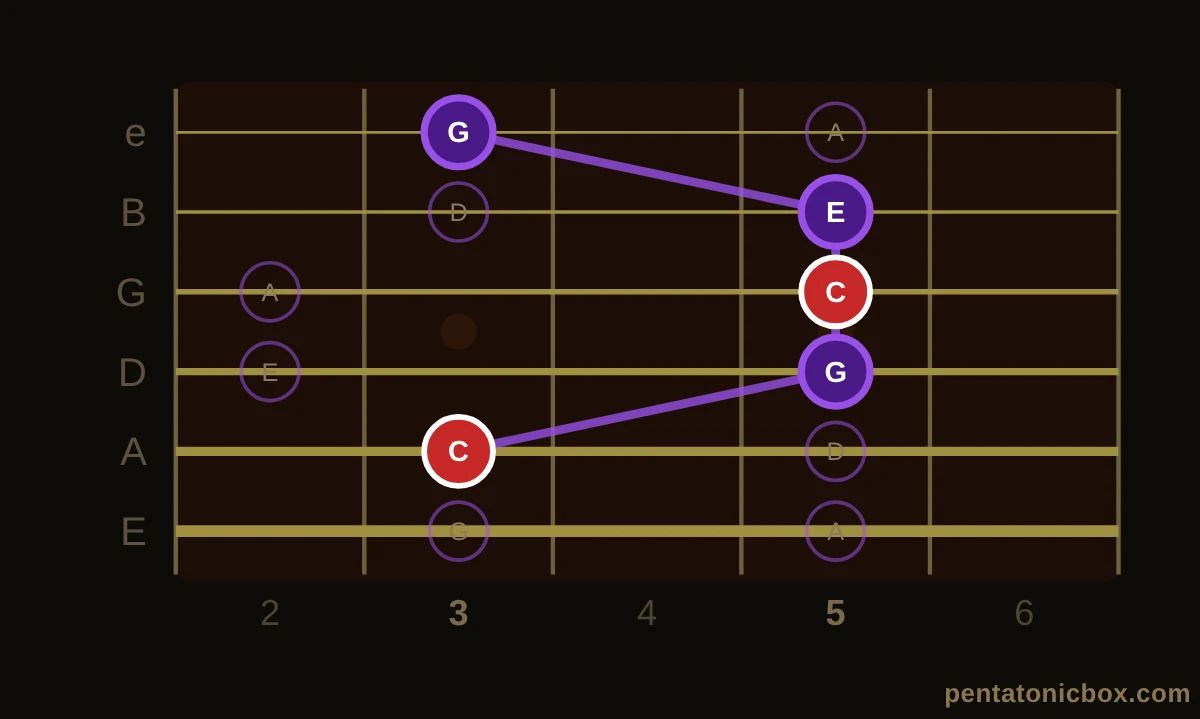
The barred A-chord shape, root on the A string at the 3rd fret. Inside Box 4.
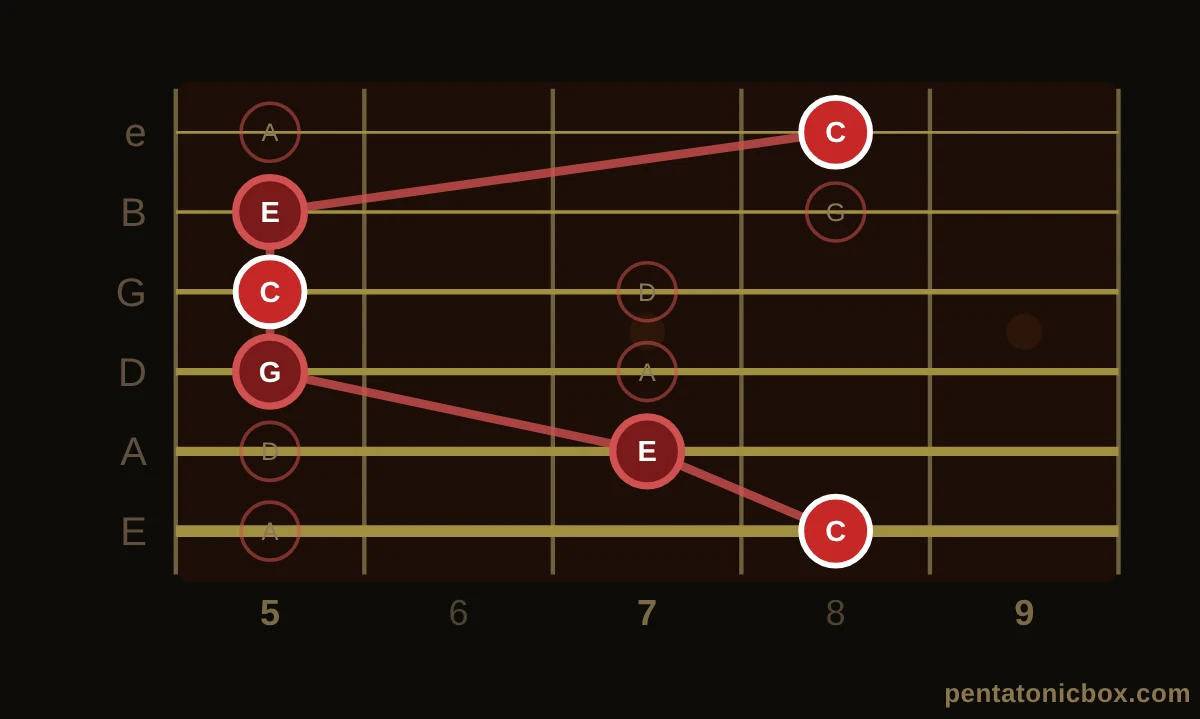
The big G-chord shape, roots on the low E and high e strings. Usually played as a partial chord. Inside Box 5.
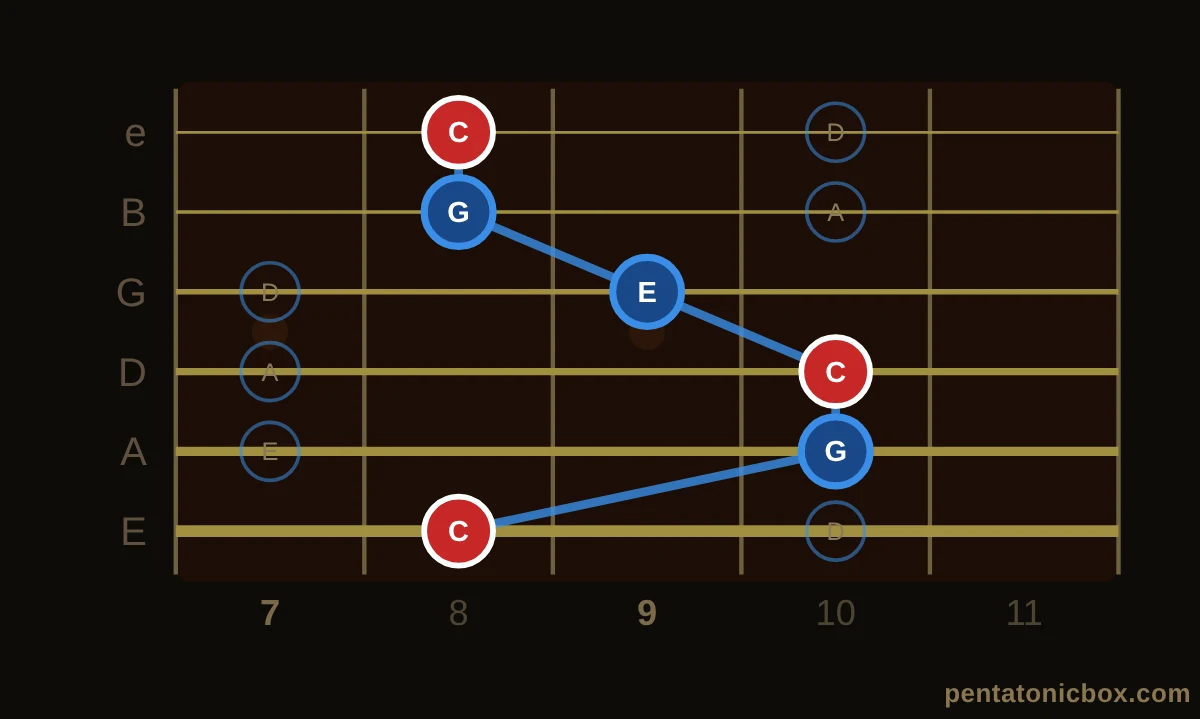
The barred E-chord shape, the most common barre chord, root on the low E at the 8th fret. Inside Box 1.
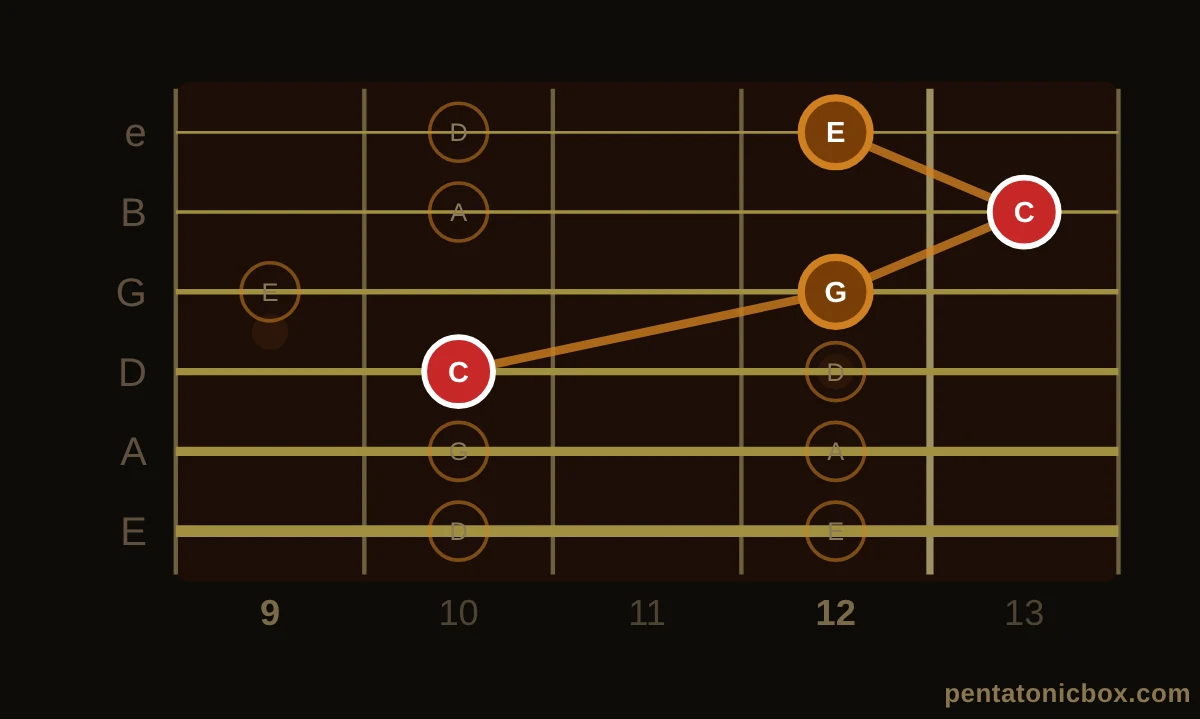
The D-chord shape on the top four strings, root on the D string at the 10th fret. Inside Box 2.
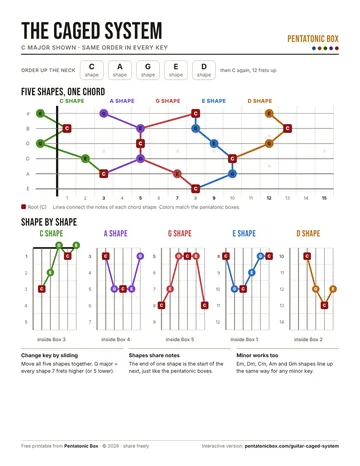
All five CAGED chord shapes in C on one neck, with each shape drawn on its own.
Download the free chart All 26 free charts →Every pentatonic box contains one CAGED shape of the key's own chord: the major chord in the major pentatonic, the minor chord in the minor pentatonic. The letters line up box for box either way.
| Box | Major pentatonic | Minor pentatonic |
|---|---|---|
| Box 1 | E shape | Em shape |
| Box 2 | D shape | Dm shape |
| Box 3 | C shape | Cm shape |
| Box 4 | A shape | Am shape |
| Box 5 | G shape | Gm shape |
The minor shapes sit in the same place as the major ones; only the 3rd drops one fret. In A minor pentatonic, Box 1 at the 5th fret holds an A minor chord in the Em shape, with roots on the low E, D and high e strings. In C major pentatonic, Box 1 at the 8th fret holds a C major chord in the E shape.
The five A minor chord shapes, drawn over the A minor pentatonic scale. Each shape fits inside one box, so while you solo in a box you can always see the chord tones to land on, starting with the root.
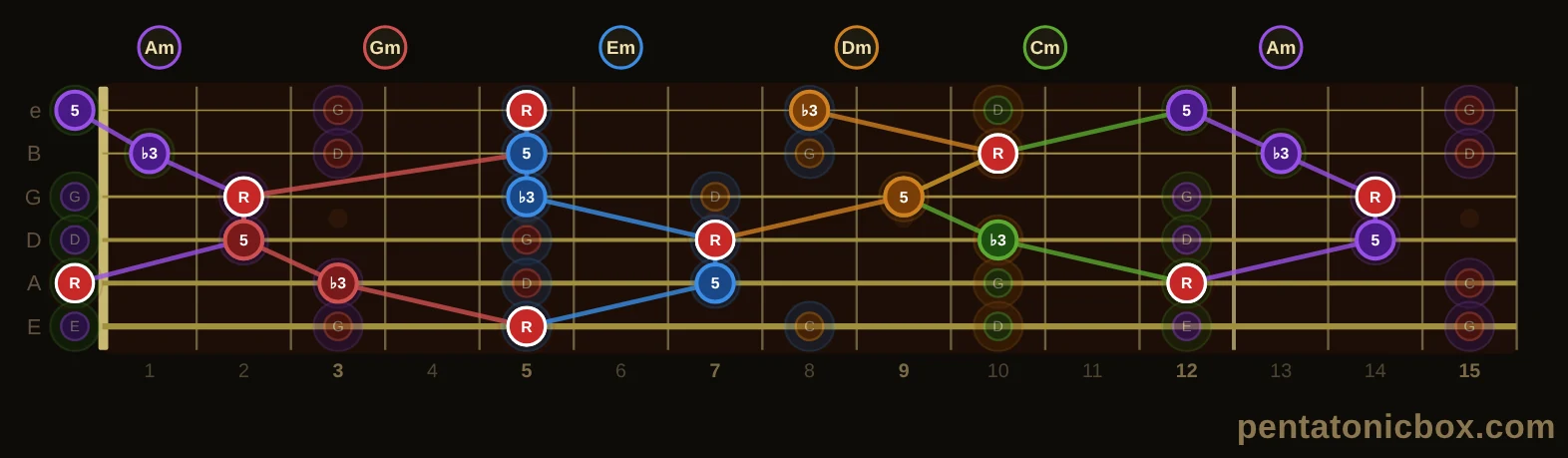
Dimmed dots are A minor pentatonic in its 5 box colors. Bright dots are the A minor chord tones (R, ♭3, 5), grouped by CAGED shape.
CAGED shapes are full chords spread over four to six strings. Triads take just three of those notes on three neighboring strings, so they are smaller and easier to move. Arpeggios play the chord's notes one at a time across the neck. All three show the same chord tones; CAGED is the map that ties them to the five pentatonic boxes.
The CAGED system uses the five open chord shapes, C, A, G, E and D, as movable shapes. Played as the same chord, the five shapes connect up the neck and cover the whole fretboard.
The name lists the five shapes in the order they appear going up the neck: C, then A, then G, then E, then D, before the C shape repeats an octave higher.
Each of the five pentatonic boxes contains one CAGED shape. In the major pentatonic, Box 1 holds the E shape, then D, C, A and G. In the minor pentatonic the same boxes hold the key's minor chord: Em, Dm, Cm, Am and Gm.
Yes. The shapes and their order never change. Only the starting fret moves, so the same five shapes cover the neck in all 12 keys.
Yes. CAGED shapes are free in any key. Pro adds CAGED over the scale, which shows each shape inside its box for the pentatonic and all 7 modes.