The blues scale is the minor pentatonic with one extra note: the ♭5, known as the blue note. That single chromatic note between the 4th and 5th gives blues, rock and jazz lines their gritty, crying sound. If you know the five minor pentatonic boxes, you already know 95% of the blues scale.
Minor pentatonic: 1 ♭3 4 5 ♭7. Add the ♭5 and you get the blues scale: 1 ♭3 4 ♭5 5 ♭7. In A, that is A C D E♭ E G.
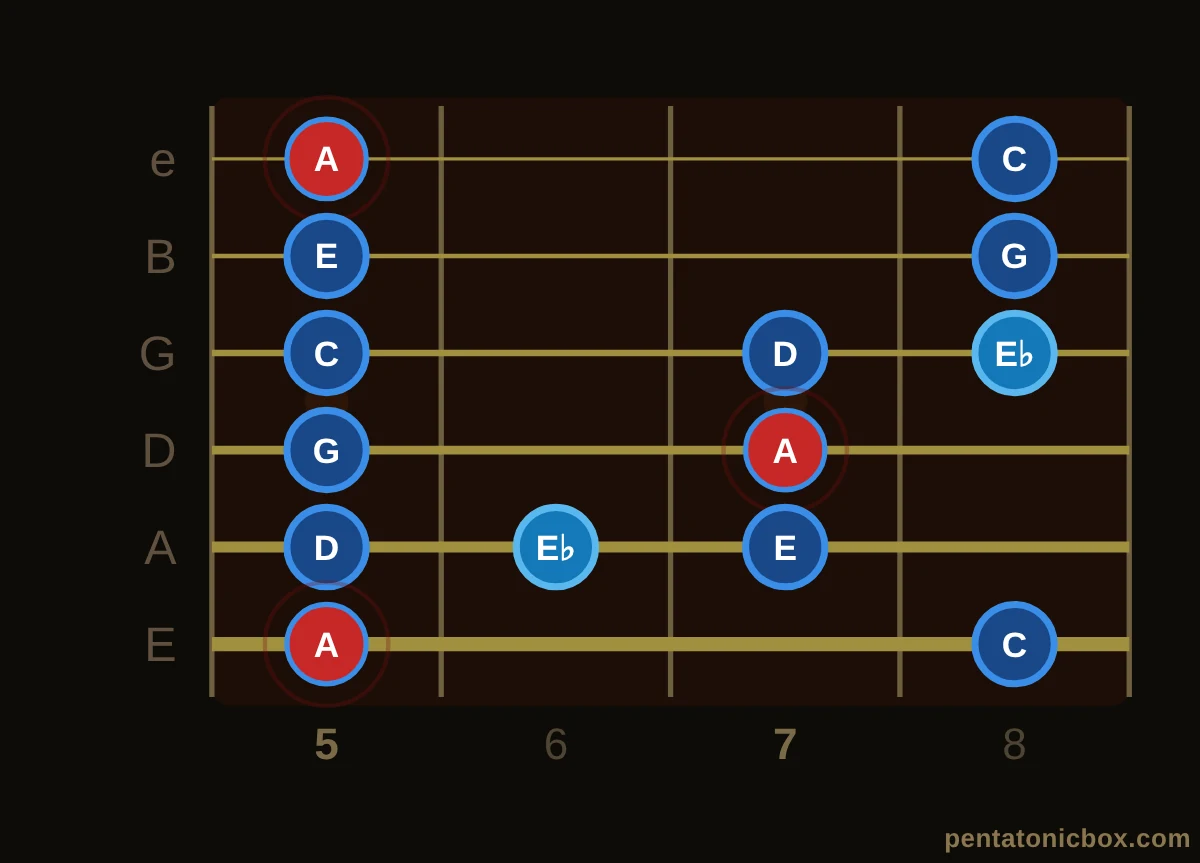
A minor pentatonic Box 1 (frets 5–8) with the blue note E♭ added at fret 6 on the A string and fret 8 on the G string.
The blue note is always one fret above the 4th (and one fret below the 5th). Here is every E♭ inside each A minor pentatonic box:
| Box | Blue note (E♭) |
|---|---|
| Box 1 (frets 5–8) | fret 8 on the G string; fret 6 on the A string |
| Box 2 (frets 7–10) | fret 8 on the G string |
| Box 3 (frets 9–13) | fret 11 on the high e string; fret 13 on the D string; fret 11 on the low E string |
| Box 4 (frets 0–3) | fret 1 on the D string |
| Box 5 (frets 2–5) | fret 4 on the B string |
In any other key, the positions move with the box: find Box 1 for your key in the minor pentatonic key chart and the blue notes sit at the same spots relative to it.
There is also a major blues scale: the major pentatonic plus a ♭3 (1 2 ♭3 3 5 6). In A, that is A B C C♯ E F♯ — and it has the same notes as F♯ minor blues. See mixing major and minor pentatonic for how blues players combine the two.
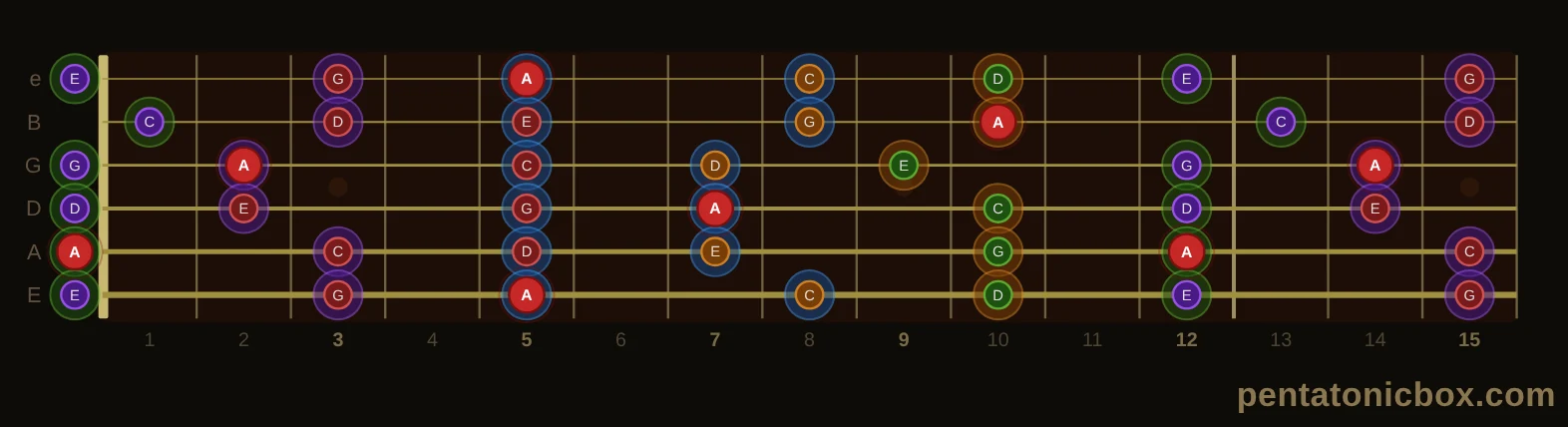
Learn these five shapes first — the blue note slots into each of them.
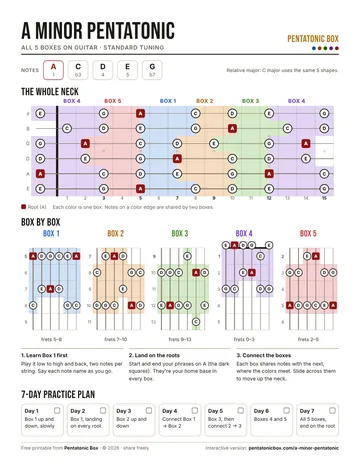
All 5 boxes on one page with note names, plus a 7-day practice plan. Pencil in the blue notes from the table above.
Download the free chart All 26 free charts →The blues scale is the minor pentatonic scale plus the ♭5, called the blue note. Its formula is 1, ♭3, 4, ♭5, 5, ♭7.
A, C, D, E♭, E and G.
The blue note is the ♭5 (flat fifth). In A it is E♭. It is a tense passing note: slide or bend through it rather than resting on it.
The blues scale has one extra note, the ♭5. Everything else is the same, so the same five box shapes work for both.