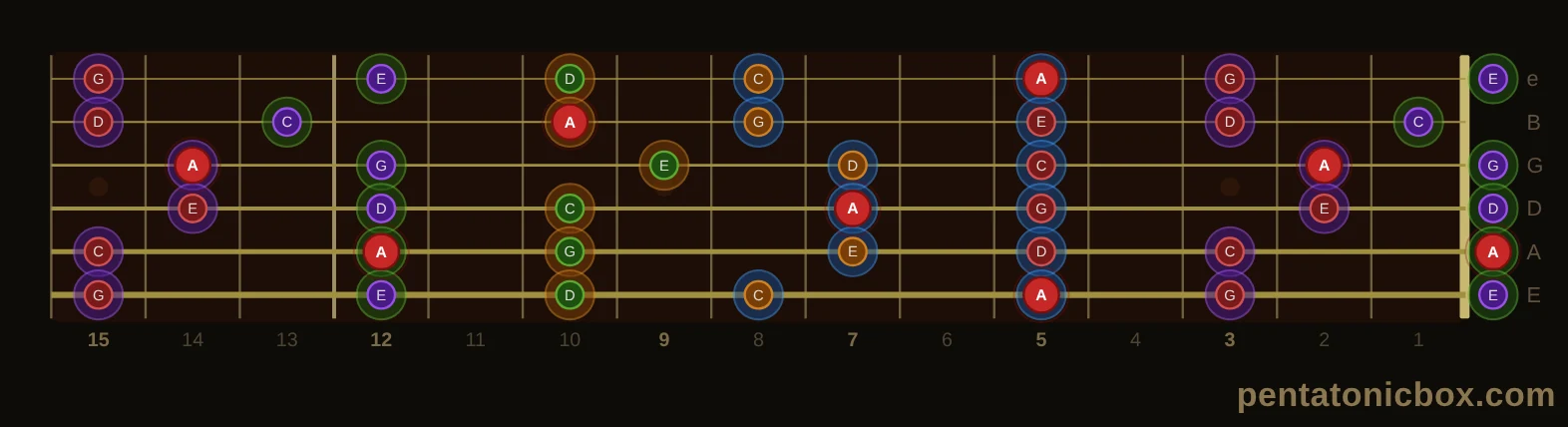
Almost every guitar scale chart is drawn for right-handed players, so lefties end up flipping each diagram in their head. The charts on this page are already mirrored for a left-handed guitar: the nut is on the right and the frets count up to the left. For any other key or scale, Pentatonic Box's free Left-Handed mode flips the whole interactive fretboard for you.
The mirror image of a standard chart. Red dots are the root, A. Double-ringed dots are shared by two boxes — that is where you slide from one box into the next.
Same shapes and fret numbers as the right-handed version, just mirrored. Start with Box 1 at the 5th fret — the most-played soloing position in rock and blues.
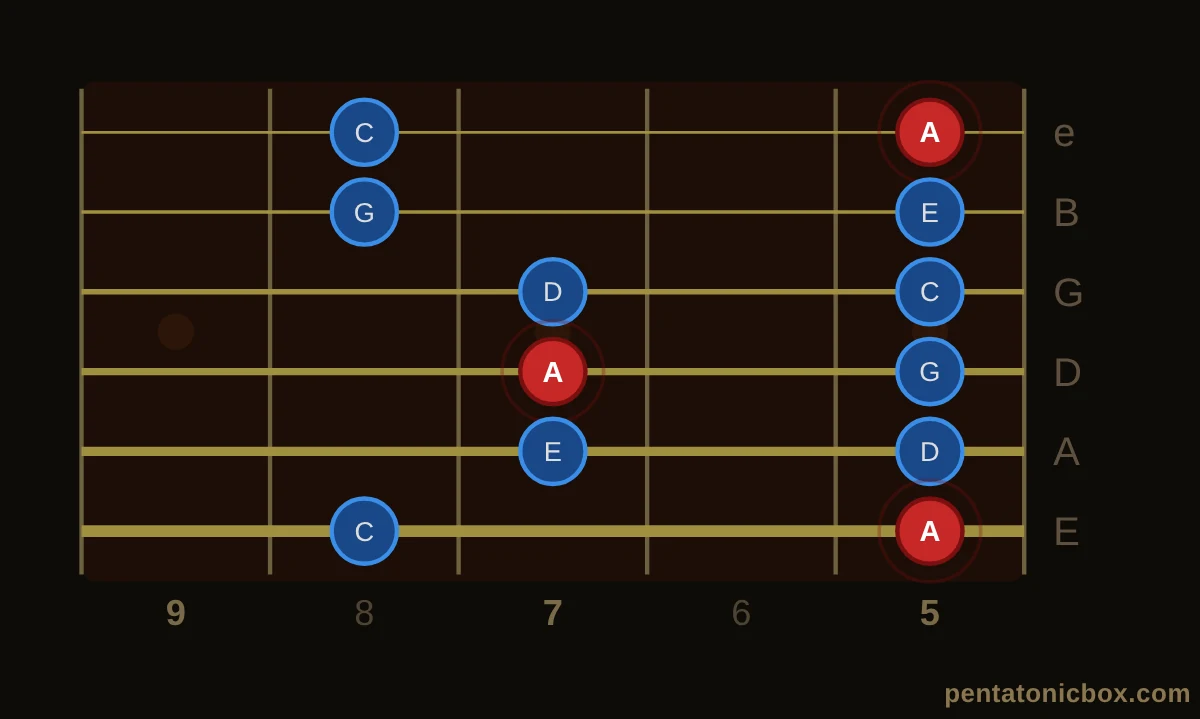
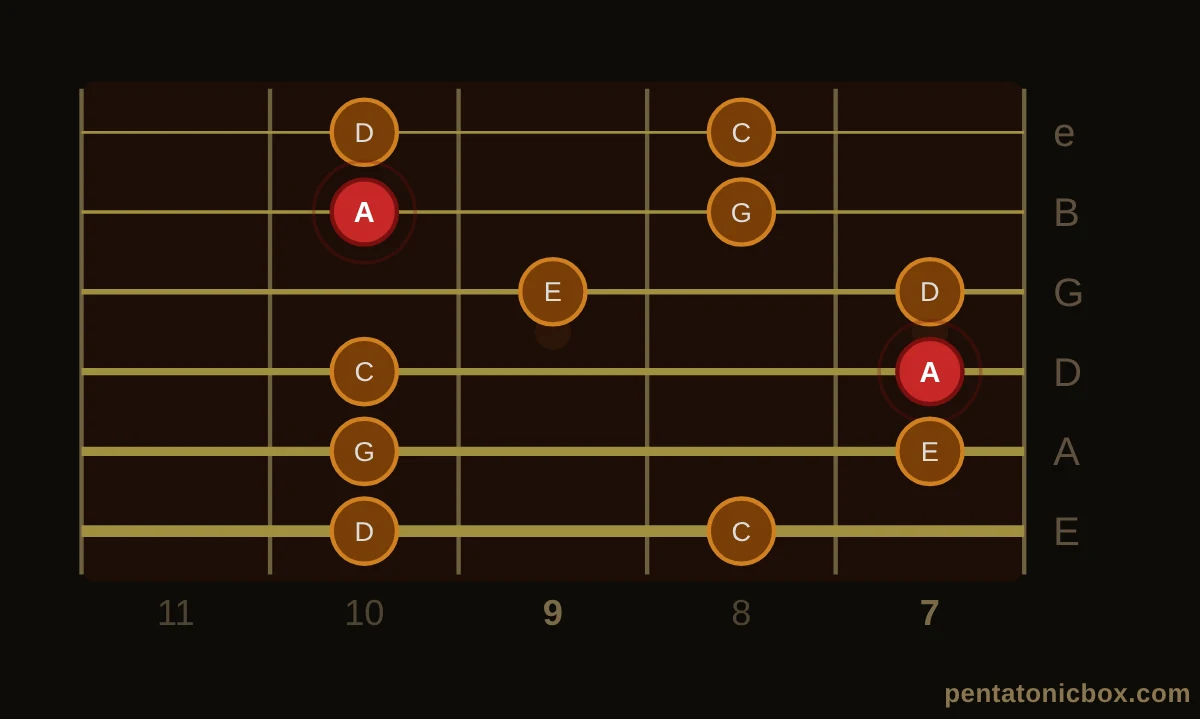
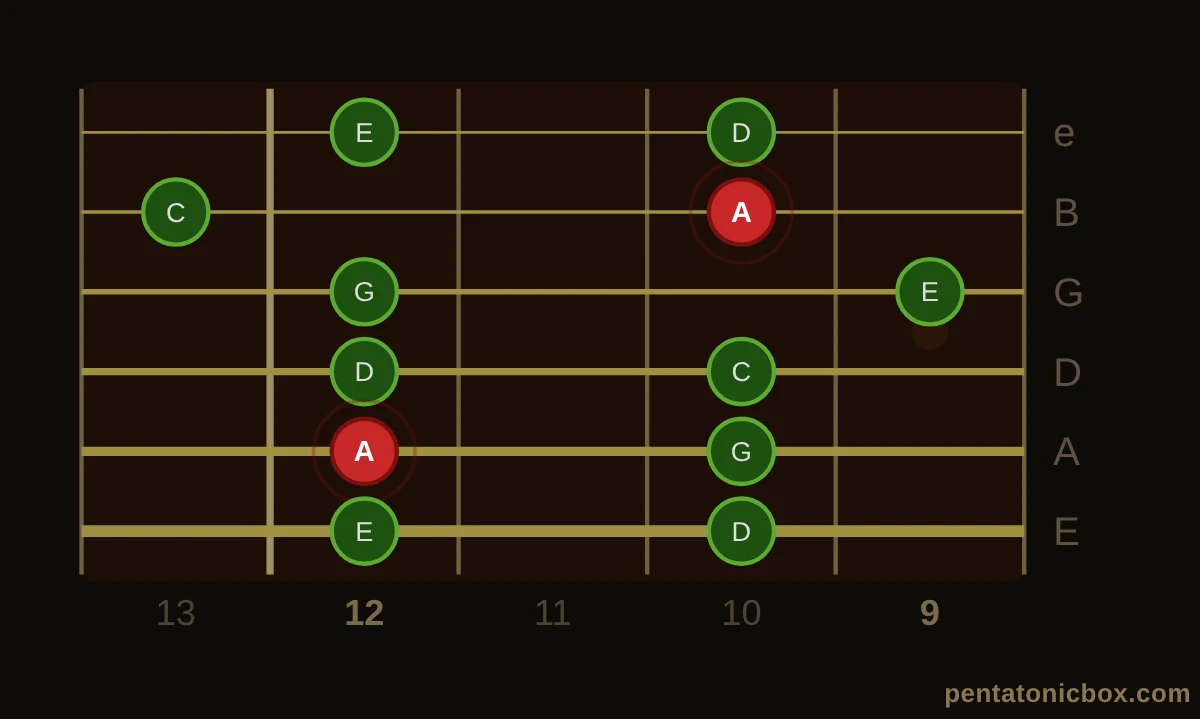
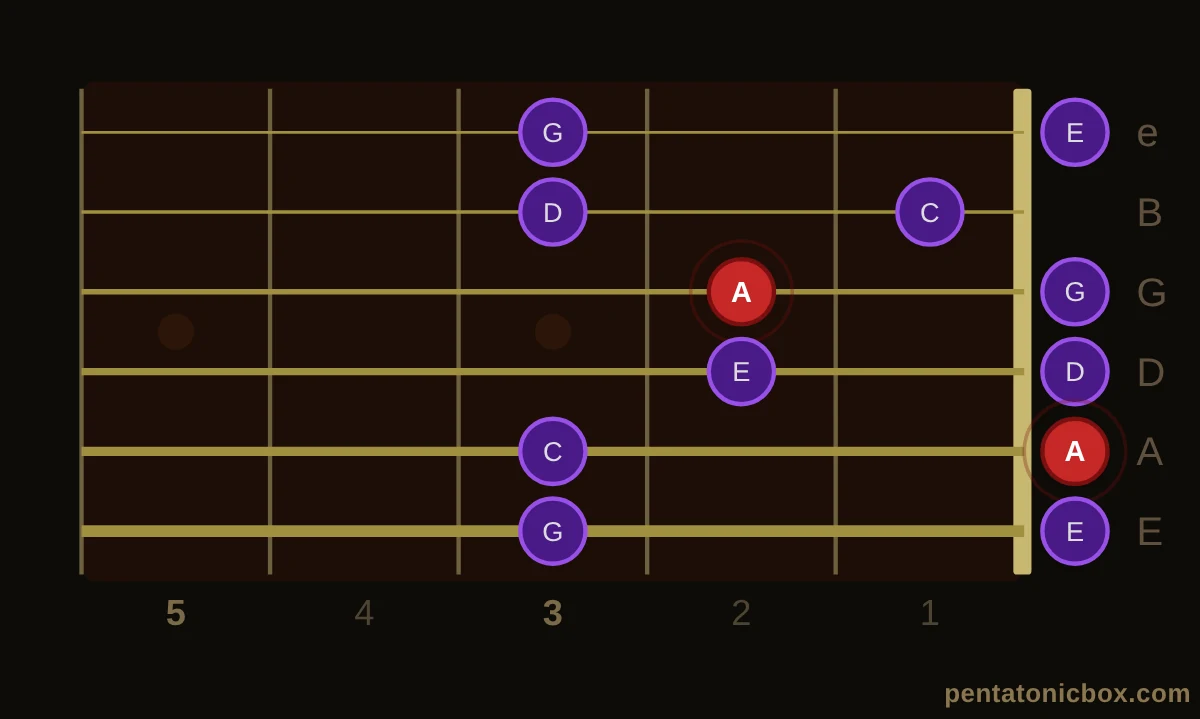
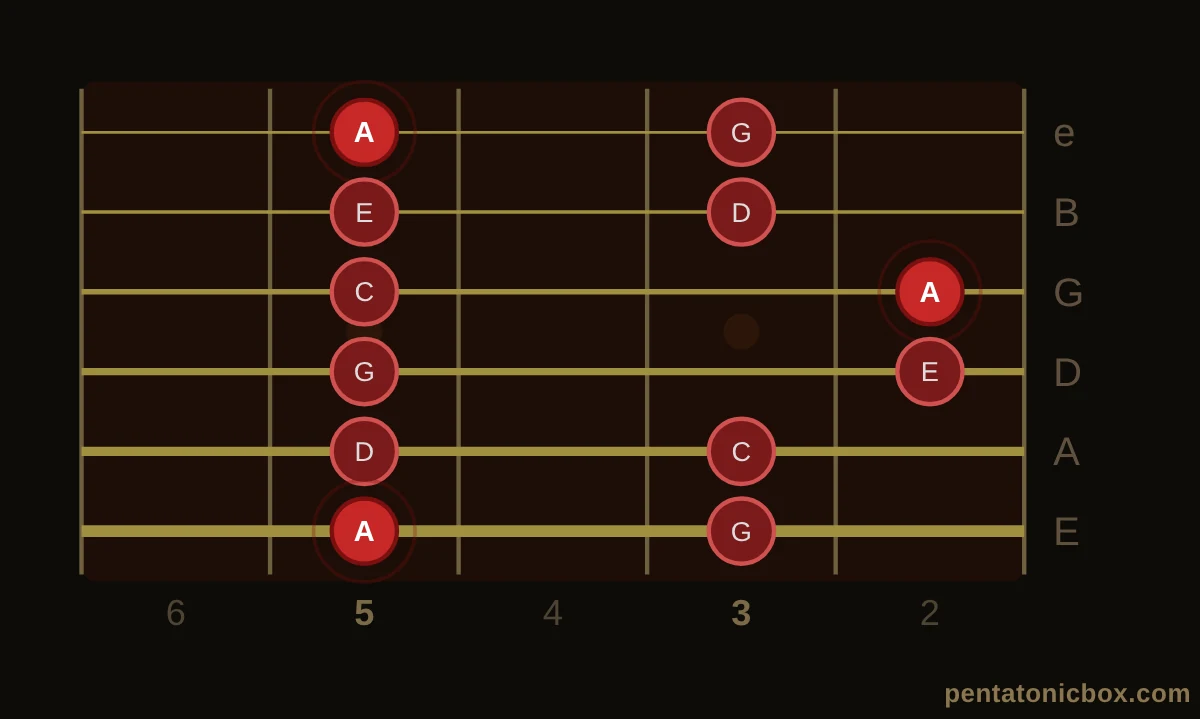
Any scale chart on this site can be flipped this way: open the key in the fretboard and switch Left-Handed on.
When you only have a right-handed chart, ignore which side things are on and read the numbers. Fret numbers and string names never change between right- and left-handed guitars — fret 5 on the low E string is fret 5 on the low E string. Find the fret number, then find that fret on your own neck. A shape that moves to the right on a standard chart moves toward your body's left on a left-handed guitar.
Yes. A left-handed guitar uses the same notes, the same fret numbers and the same box shapes. Only the picture is mirrored, because the neck points the other way.
Yes. Left-Handed mode is free for every key, including all 5 minor pentatonic boxes on the full 24-fret neck.
Only about 1 in 10 people is left-handed, so most books, websites and apps draw their charts for right-handed players and leave lefties to flip them.
The same as everyone else: A minor pentatonic, starting with Box 1 at the 5th fret. It is the most common soloing shape in rock and blues, and the other four boxes connect to it.