A minor pentatonic, Box 1 (frets 5–8)
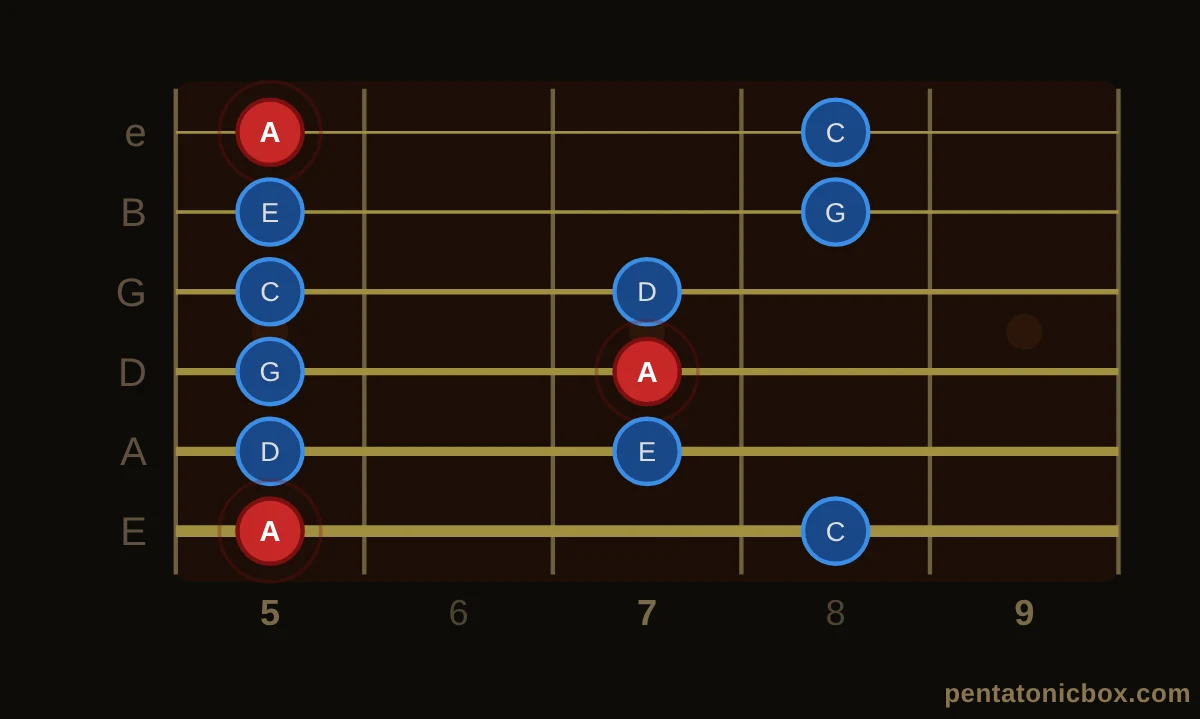
A · C · D · E · G
A major pentatonic, Box 1 (frets 4–7)
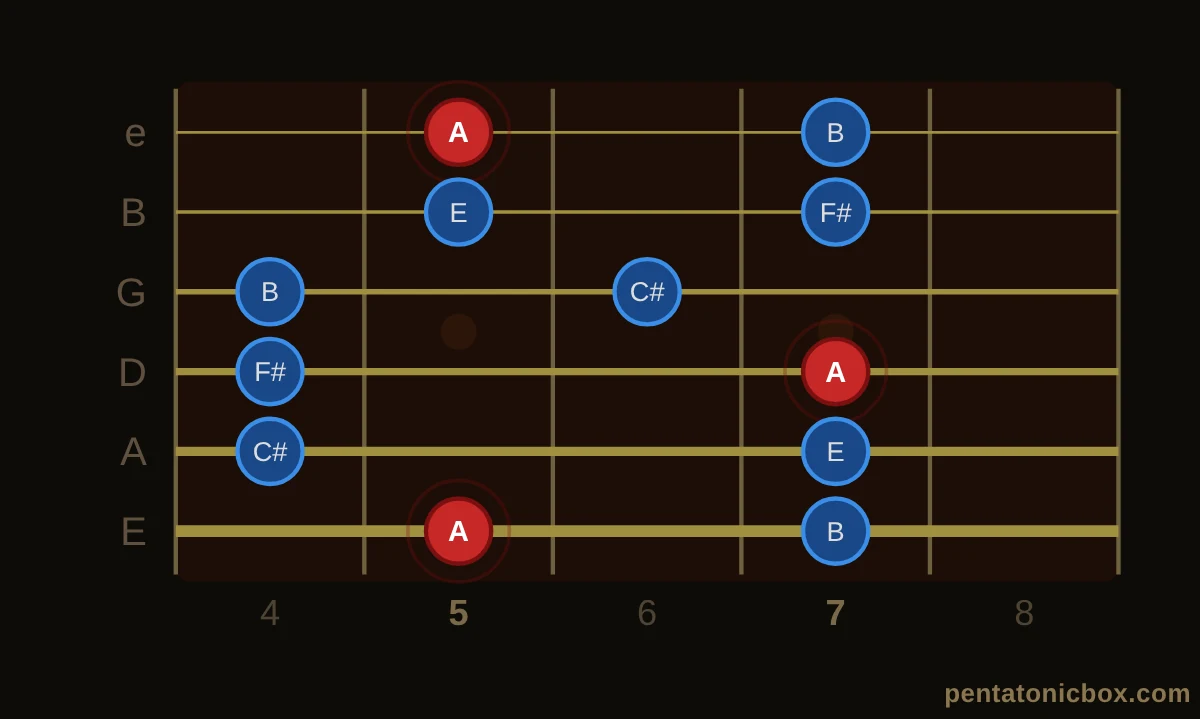
A · B · C♯ · E · F♯
Mixing the major and minor pentatonic is the secret behind the sound of B.B. King, Eric Clapton and most great blues players. The minor pentatonic gives the gritty, bluesy notes; the major pentatonic adds sweet, melodic ones. Over a blues, where every chord is a dominant 7, you can use both in the same phrase. Here is how they fit together on the neck, in the key of A.
A · C · D · E · G
A · B · C♯ · E · F♯
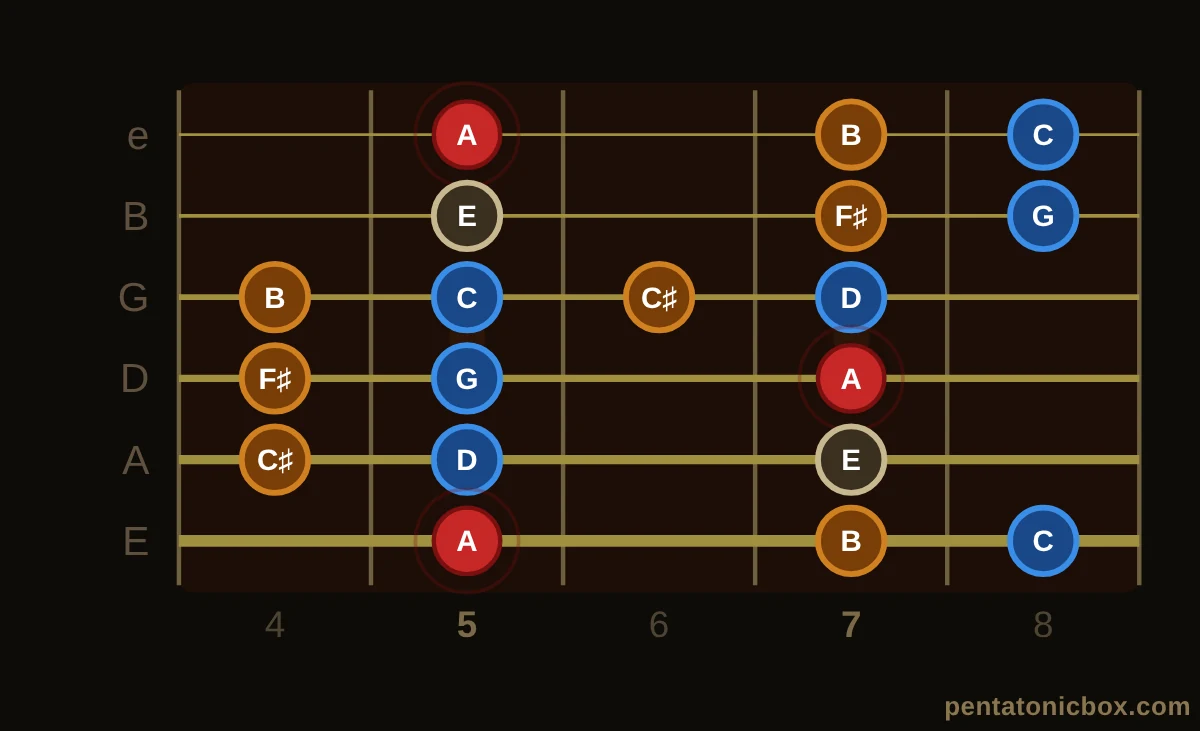
Both share A (the root) and E (the 5th). Everything else is different: minor has C, D and G; major has B, C♯ and F♯.
Here they are combined around the 5th fret. Blue notes are minor-only, orange notes are major-only, and red and gold are the shared root and 5th. Every note of both scales is under your hand without changing position.
A major pentatonic uses the same five shapes as F♯ minor pentatonic, three frets lower, because they share the same notes. So if you know your minor boxes, you already know the major ones: slide the shape down three frets and the root moves. See both scales in every key: A minor, A major, and the other key pages.
More ways to get out of one shape: break out of the pentatonic box. The chord behind it all: A7 arpeggio.
Yes, over blues and dominant 7 chords. The minor pentatonic gives the bluesy notes and the major pentatonic adds sweet ones; many classic blues solos switch between them in the same phrase.
Only the root and the 5th. In A, both scales contain A and E; minor adds C, D and G, and major adds B, C sharp and F sharp.
Over minor chords or in a minor key. The major 3rd clashes with a minor chord, so use the minor pentatonic there.
Move the minor pentatonic shape down three frets. A major pentatonic uses the same notes and shapes as F sharp minor pentatonic.
More guides: pentatonic boxes guide · connecting the 5 boxes · breaking out of the box · learning the fretboard notes · left-handed scale charts · guitar modes explained.
See also: Minor pentatonic scale · Major pentatonic scale · Blues scale · Free printable charts